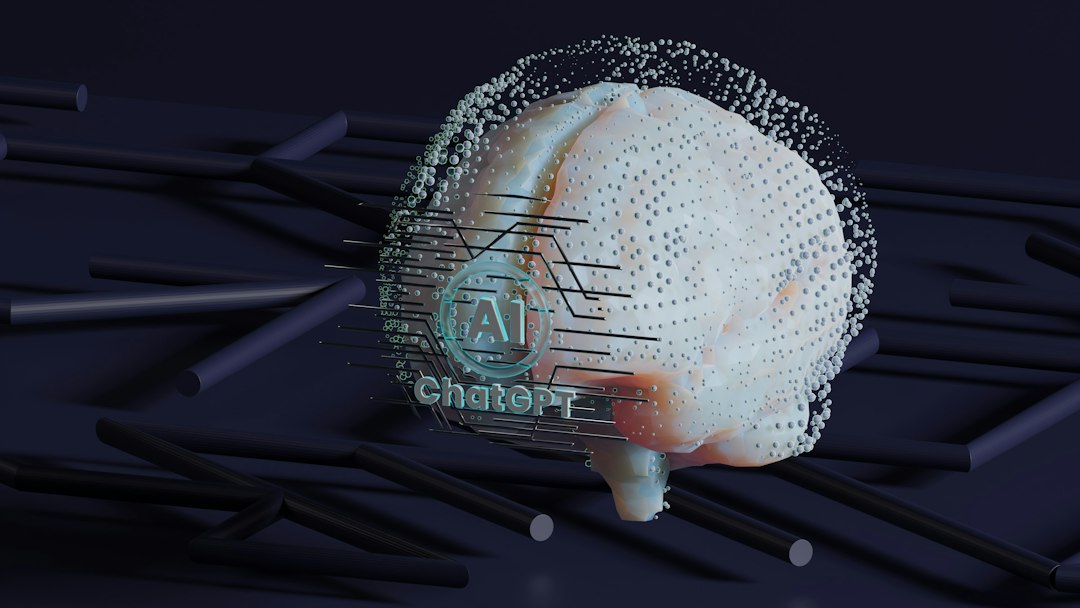




Llm

Photo by Solen Feyissa on Unsplash

Training and Evaluating Large Language Models

In the realm of artificial intelligence, few technologies have generated as much excitement and intrigue as Large Language Models (LLMs). These powerful tools have the potential to revolutionize the way we interact with machines, making it possible to have more natural and intuitive conversations with computers. But what exactly are LLMs, and how can they be used to improve our daily lives? In this article, we’ll delve into the world of LLMs, exploring their capabilities, applications, and future potential.

What are Large Language Models?

Large Language Models are a type of artificial intelligence designed to process and understand human language. These models are trained on vast amounts of text data, which enables them to learn patterns and relationships within language. This training allows LLMs to generate human-like text, answer questions, and even engage in conversation. The key to LLMs’ success lies in their ability to learn from massive datasets, which can include books, articles, research papers, and even social media posts. By analyzing these datasets, LLMs can identify trends, nuances, and context, making them incredibly effective at understanding and generating language.

One of the most significant advantages of LLMs is their ability to improve over time. As more data becomes available, these models can be fine-tuned and updated, allowing them to become even more accurate and effective. This process of continuous learning and improvement has led to the development of some truly remarkable LLMs, such as transformer-based models like BERT and RoBERTa. These models have achieved state-of-the-art results in a range of natural language processing (NLP) tasks, including language translation, sentiment analysis, and text classification.

Applications of Large Language Models

So, what can LLMs be used for? The answer is surprisingly diverse. From chatbots and virtual assistants to language translation and content generation, the potential applications of LLMs are vast. Here are just a few examples:

  • Chatbots and Virtual Assistants: LLMs can be used to power chatbots and virtual assistants, allowing them to understand and respond to user queries in a more natural and intuitive way.
  • Language Translation: LLMs can be used to improve language translation, enabling more accurate and nuanced translations that capture the subtleties of human language.
  • Content Generation: LLMs can be used to generate high-quality content, such as articles, blog posts, and even entire books.
  • Sentiment Analysis: LLMs can be used to analyze sentiment and emotion in text, allowing businesses to better understand their customers’ needs and preferences.

The applications of LLMs are not limited to these examples, however. They can also be used in a range of other areas, including education, healthcare, and finance. For instance, LLMs can be used to develop personalized learning plans for students, or to analyze medical texts and identify potential health risks. The possibilities are endless, and as the technology continues to evolve, we can expect to see even more innovative applications of LLMs.

Training and Evaluating Large Language Models

So, how are LLMs trained and evaluated? The process of training an LLM typically involves several stages, including data preparation, model selection, and hyperparameter tuning. Here’s a brief overview of each stage:

  • Data Preparation: The first stage of training an LLM involves preparing the data. This includes collecting and preprocessing the text data, as well as splitting it into training and validation sets.
  • Model Selection: The next stage involves selecting a suitable model architecture. This can include transformer-based models like BERT and RoBERTa, or other architectures like recurrent neural networks (RNNs) and long short-term memory (LSTM) networks.
  • Hyperparameter Tuning: Once the model architecture has been selected, the next stage involves tuning the hyperparameters. This includes adjusting parameters like learning rate, batch size, and sequence length to optimize the model’s performance.

Evaluating LLMs is also crucial, as it allows us to assess their performance and identify areas for improvement. There are several metrics that can be used to evaluate LLMs, including perplexity, accuracy, and F1 score. Perplexity is a measure of how well a model can predict the next word in a sequence, while accuracy and F1 score are used to evaluate the model’s performance on specific tasks like language translation and sentiment analysis.

Future of Large Language Models

So, what does the future hold for LLMs? As the technology continues to evolve, we can expect to see even more impressive advancements in the field of NLP. Some potential areas of development include:

  • Multimodal Learning: One area of research that holds great promise is multimodal learning, which involves training models to process and understand multiple forms of data, such as text, images, and audio.
  • Explainability and Transparency: Another area of research that is gaining attention is explainability and transparency, which involves developing models that can provide insights into their decision-making processes.
  • Edge AI: Finally, there is a growing trend towards edge AI, which involves deploying AI models on edge devices like smartphones and smart home devices.

As LLMs continue to advance, we can expect to see even more innovative applications in areas like education, healthcare, and finance. We can also expect to see increased adoption of LLMs in industries like customer service, marketing, and sales, where they can be used to improve customer experience and drive business growth.

LLMs are a powerful technology that has the potential to revolutionize the way we interact with machines. With their ability to understand and generate human-like language, LLMs can be used in a range of applications, from chatbots and virtual assistants to language translation and content generation. As the technology continues to evolve, we can expect to see even more impressive advancements in the field of NLP, and increased adoption of LLMs in industries around the world. Whether you’re a business leader, a developer, or simply someone interested in AI, it’s an exciting time to be exploring the world of LLMs.

  • LLMs are a type of AI designed to process and understand human language.
  • LLMs can be used in a range of applications, including chatbots, language translation, and content generation.
  • The future of LLMs holds great promise, with potential advancements in areas like multimodal learning, explainability and transparency, and edge AI.

  • LLMs have the potential to revolutionize the way we interact with machines, and can be used to improve customer experience and drive business growth.

You may also like...