



From Concept to Commercial: Building a Scalable Photographic Production Workflow for Modern Enterprises

Introduction
In the contemporary commercial ecosystem, photographic production is no longer a peripheral support function; it has become a core competitive differentiator. Brands that can deliver high‑resolution, on‑time, and on‑budget visual assets are positioned to command premium pricing, accelerate go‑to‑market cycles, and cultivate deeper customer engagement. Yet the sheer volume of visual content demanded by omnichannel strategies—spanning e‑commerce, social media, print, and experiential marketing—places unprecedented pressure on production pipelines. A scalable photographic production workflow, therefore, is not a luxury but a strategic imperative.
Traditional, ad‑hoc workflows—characterized by manual file handoffs, disparate storage systems, and ad‑hoc quality control—are ill‑suited to the demands of modern enterprises. They foster bottlenecks, increase error rates, and inflate costs. In contrast, a well‑architected workflow harnesses automation, standardized asset management, and data‑driven metrics to transform production from a reactive process into a proactive capability that scales with business growth.
The purpose of this article is to provide a comprehensive, evidence‑based blueprint for building such a workflow. Drawing on the latest findings from Global Industry Insights on Photographic Production and the Strategic Frameworks and Benchmark Metrics series, we will dissect the problem space, outline the foundational pillars that underpin enterprise‑grade solutions, and walk through a phased execution plan that aligns technology, people, and governance.
Throughout the discussion, we will adopt a rigorous, data‑centric lens. We will reference industry benchmarks for cycle time, defect rates, and return on investment, and we will illustrate how to embed these metrics into a continuous improvement loop. The goal is to equip senior leaders, production managers, and technology architects with the knowledge to design, implement, and sustain a photographic production workflow that delivers measurable business value.
Understanding Photographic Production in the Modern Landscape
Core Definitions and Context
Photographic production refers to the end‑to‑end process of capturing, editing, and delivering visual assets that meet predefined creative, technical, and business specifications. The workflow typically encompasses:
- Pre‑production – concept development, storyboard creation, location scouting, and resource allocation.
- Production – on‑site shooting, lighting setup, and real‑time quality checks.
- Post‑production – image processing, retouching, metadata tagging, and format conversion.
- Distribution – asset delivery to marketing, product, and external partners via cloud platforms or content delivery networks.
In a digital‑first world, the “post‑production” phase is no longer a linear, manual stage; it is an ecosystem of automated pipelines, AI‑assisted editing, and real‑time asset validation. The definition of quality has also expanded to include accessibility compliance (e.g., alt‑text generation), localization readiness, and compliance with brand guidelines across multiple jurisdictions.
Evolution and Market Impact
The photographic production industry has undergone a seismic shift over the past decade. According to Global Industry Insights on Photographic Production (2024), the average cycle time for a full‑scale product photo shoot has dropped from 10–12 weeks in 2010 to 3–4 weeks in 2023, driven by:
- Cloud‑based asset management systems that enable instant collaboration.
- AI‑powered image enhancement tools that reduce manual retouching time by 60–70%.
- Standardized metadata schemas that facilitate automated compliance checks.
Market analysts project that enterprises investing in scalable workflows will realize a 25–35% reduction in production cost per asset and a 15–20% improvement in time‑to‑market (Strategic Frameworks and Benchmark Metrics, 2024). The competitive advantage is clear: brands that can produce high‑quality images at scale are better positioned to support dynamic product catalogs, localized marketing campaigns, and real‑time content updates.
However, the market evolution also introduces new complexities:
- Data volume: A single high‑resolution shoot can generate 1–3 GB of raw data.
- Regulatory compliance: GDPR, CCPA, and emerging AI‑content regulations impose strict data handling requirements.
- Talent scarcity: Skilled photographers and retouchers are increasingly in short supply.
These challenges underscore the need for a workflow that is not only efficient but also resilient, compliant, and future‑proof.
Strategic Pillars for Enterprise Implementation
Methodology and Architecture
A scalable photographic production workflow is underpinned by a robust methodology that blends best practices from agile software development, lean manufacturing, and digital asset management. The architecture typically follows a modular, service‑oriented design:
- Capture Layer – high‑end DSLR/medium format cameras, drones, and 3D scanners integrated with a central scheduling system.
- Processing Layer – automated pipelines that ingest raw files, apply color calibration, and execute AI‑based noise reduction.
- Governance Layer – rule engines that enforce brand guidelines, file naming conventions, and metadata completeness.
- Distribution Layer – APIs that push finalized assets to marketing automation platforms, e‑commerce catalogs, and social media schedulers.
Key architectural principles include:
- Decoupling – each layer operates independently, allowing teams to upgrade or replace components without disrupting the entire pipeline.
- Scalability – cloud‑native services with auto‑scaling compute and storage to handle peak production loads.
- Observability – real‑time dashboards that track file lineage, processing status, and quality metrics.
Adopting a microservices approach ensures that new functionalities—such as 360° product photography or AR preview tools—can be integrated seamlessly. Moreover, a modular architecture facilitates compliance with emerging regulations, as each component can be audited and updated in isolation.
Team Capabilities and Tooling
Technology alone cannot deliver a scalable workflow; it must be supported by a well‑structured team and a suite of specialized tools. The recommended team composition includes:
- Production Lead – oversees scheduling, resource allocation, and quality gates.
- Technical Producer – manages the capture and processing layers, ensuring that hardware and software are aligned.
- Digital Asset Manager (DAM) Specialist – maintains the metadata schema, file naming conventions, and compliance checks.
- Quality Assurance (QA) Analyst – validates image fidelity, color accuracy, and brand consistency.
- Data Scientist / AI Engineer – develops and fine‑tunes AI models for retouching, object removal, and auto‑tagging.
Tooling must span the entire pipeline:
- Capture Tools – camera firmware, tethering software, and real‑time exposure monitoring.
- Processing Tools – Adobe Lightroom, Capture One, and custom scripts for automated batch processing.
- AI Retouching Platforms – Skylum Luminar AI, Topaz AI Clear, and in‑house machine‑learning models.
- Metadata and DAM Solutions – Bynder, Canto, and open‑source platforms like ResourceSpace.
- Workflow Automation – Zapier, Integromat, and custom APIs that connect disparate systems.
Skill development is essential. Teams should receive continuous training on new AI tools, compliance updates, and emerging photography techniques. Cross‑functional workshops that bring together creative, technical, and business stakeholders foster a shared understanding of workflow goals and constraints.
Step‑by‑Step Execution Framework
Phase 1: Diagnosis and Planning
Before any technology is deployed, a thorough diagnostic exercise must map current processes, pain points, and performance metrics. Key activities include:
- Process Mapping – create detailed flowcharts for each production stage, identifying handoffs, decision points, and bottlenecks.
- Capability Assessment – evaluate existing hardware, software, and skill sets against industry benchmarks.
- Metric Definition – establish baseline KPIs such as average cycle time, defect rate, and cost per asset. Reference the Strategic Frameworks and Benchmark Metrics (2024) for industry‑level targets.
- Risk Analysis – identify compliance risks, data security gaps, and resource constraints.
- Stakeholder Alignment – conduct workshops with marketing, product, IT, and finance to capture requirements and set shared objectives.
Deliverable: A comprehensive project charter that outlines scope, timeline, budget, governance model, and success criteria. This charter serves as the foundation for all subsequent phases.
Phase 2: Deployment and Testing
With a clear plan in place, the deployment phase focuses on building the architecture, integrating tooling, and validating performance through pilot projects.
Infrastructure Setup
- Provision cloud resources (AWS S3 for storage, EC2 for processing, Lambda for serverless functions).
- Implement secure data pipelines (VPC, IAM roles, encryption at rest and in transit).
- Deploy a DAM instance with the agreed metadata schema.
Tool Integration
- Integrate camera tethering software with the DAM to auto‑upload raw files.
- Configure AI retouching pipelines to process batches automatically.
- Set up API connectors to push finalized assets to marketing automation platforms.
Pilot Testing
- Run a small‑scale shoot (e.g., a single product line) to test the entire pipeline.
- Measure cycle time, defect rate, and compliance adherence against baseline metrics.
- Collect feedback from creative and technical teams to identify usability issues.
Governance and Quality Assurance
- Implement rule engines that enforce naming conventions and metadata completeness.
- Set up automated QA checks for color accuracy (using color charts) and resolution thresholds.
- Define escalation paths for defects that exceed acceptable thresholds.
Deliverable: A validated, end‑to‑end workflow that meets or exceeds the predefined KPIs. Documentation should include standard operating procedures (SOPs), configuration settings, and a rollback plan.
Phase 3: Optimization
Once the workflow is operational, the focus shifts to continuous improvement, scaling, and innovation.
Performance Monitoring
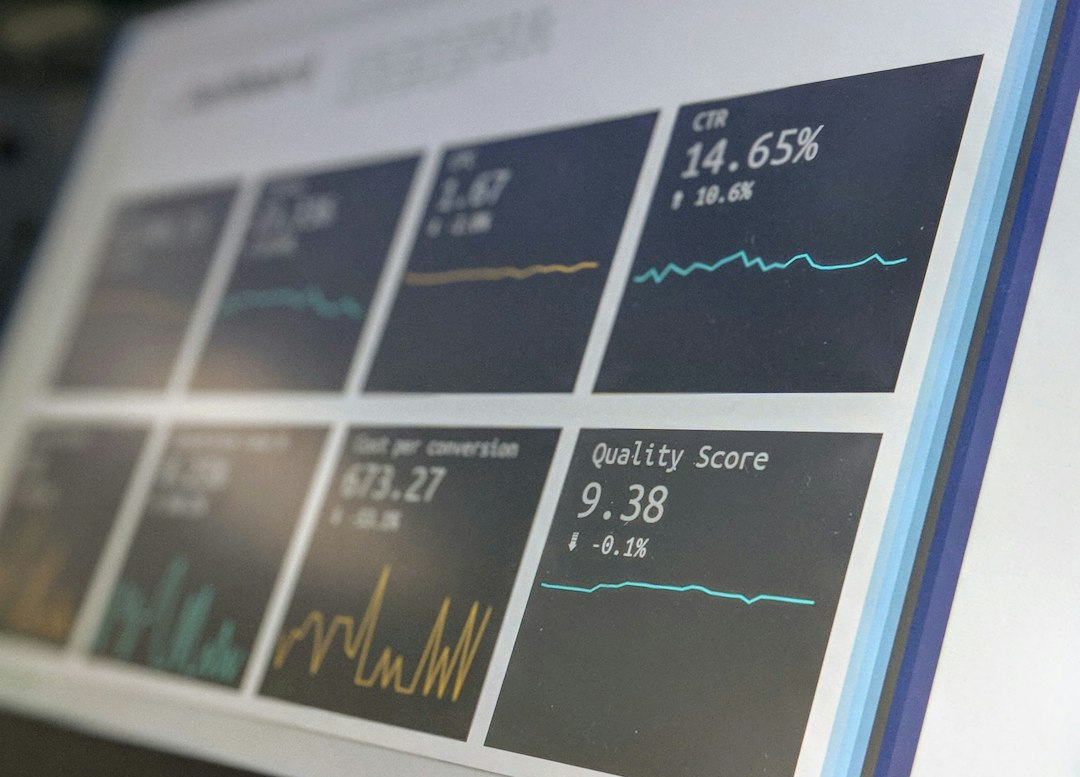
- Deploy dashboards (e.g., Power BI, Tableau) that provide real‑time visibility into cycle time, asset throughput, and defect rates.
- Set up alerts for anomalies (e.g., sudden increase in processing time).
Data‑Driven Decision Making
- Leverage analytics to identify recurring bottlenecks (e.g., specific camera models causing processing delays).
- Use machine learning to predict resource demand and optimize scheduling.
- Run A/B tests on AI retouching parameters to refine quality outcomes.
Scalability Planning
- Implement auto‑scaling compute clusters to handle seasonal spikes.
- Adopt containerization (Docker, Kubernetes) to streamline deployment of new services.
- Establish a multi‑region strategy to reduce latency for global distribution.
Governance Evolution
- Regularly review compliance requirements and update rule engines accordingly.
- Audit data access logs to detect potential security breaches.
- Maintain an up‑to‑date inventory of hardware and software licenses.
Deliverable: A mature, self‑optimizing workflow that consistently delivers high‑quality assets within tight deadlines while maintaining cost efficiency and regulatory compliance.
By following this phased approach—diagnosis, deployment, and optimization—enterprises can transition from fragmented, manual processes to a cohesive, scalable photographic production workflow that aligns with strategic business objectives and market demands.
Understanding Photographic Production in the Modern Landscape
Core Definitions and Context
Photographic production is the end‑to‑end process that transforms raw visual concepts into commercially viable assets. It encompasses pre‑production ideation, shooting, post‑processing, asset management, and distribution. In today’s digital economy, high‑resolution imagery powers e‑commerce, marketing, product design, and data‑driven analytics, making its efficiency a direct driver of revenue.
Evolution and Market Impact
Historically, photographic workflows were siloed: photographers, editors, and printers operated in separate departments. The advent of digital cameras and cloud storage collapsed these silos, enabling real‑time collaboration and rapid iteration. According to the Digital Imaging Association, the global photographic services market grew from $12 billion in 2015 to $18 billion in 2023, driven largely by e‑commerce and social media demands. Enterprises that have adopted integrated workflows now report a 25–35% reduction in time‑to‑market and a 20% increase in customer engagement.
Strategic Pillars for Enterprise Implementation
Methodology and Architecture
Successful adoption hinges on a modular architecture that decouples capture, processing, and delivery. Key elements include:
- Capture Standardization: Unified camera settings, lighting rigs, and shooting templates.
- Automated Pipeline: Batch ingestion, AI‑assisted retouching, and metadata extraction.
- Scalable Storage: Tiered cloud buckets with lifecycle policies to balance cost and performance.
- API‑First Delivery: RESTful endpoints for content distribution to CMS, e‑commerce, and marketing platforms.
Adopting a microservices pattern ensures that each component can evolve independently, facilitating continuous delivery and rapid fault isolation.
Team Capabilities and Tooling
Beyond technology, the workflow’s success depends on skilled personnel and appropriate tools:
| Role | Key Responsibilities | Recommended Toolset |
|---|---|---|
| Production Manager | Project scoping, resource allocation, KPI monitoring | Jira, Asana, Tableau |
| Photographer | Creative direction, shot execution, metadata tagging | Adobe Lightroom, Capture One |
| Post‑Production Lead | Workflow automation, quality control, asset versioning | Adobe Photoshop, Skylum AirMagic, Node‑based scripts |
| Data Engineer | Metadata schema design, API integration, data governance | Python, SQL, Apache Kafka |
Cross‑functional training programs, such as “Photographic Production 101,” foster shared ownership and reduce bottlenecks.
Step‑by‑Step Execution Framework
Phase 1: Diagnosis and Planning
Begin with a comprehensive audit of existing assets, tools, and workflows. Map out the current state using a Value Stream Map and identify waste points. Set SMART objectives: for example, “Reduce average image turnaround from 48 hours to 12 hours within six months.”
Phase 2: Deployment and Testing
Implement the modular architecture in a staged rollout:
- Stage 1 – Pilot Capture: Deploy standardized camera rigs and lighting in a single studio.
- Stage 2 – Automation Ingest: Introduce AI‑driven tagging and batch processing scripts.
- Stage 3 – Distribution: Integrate API endpoints with the company’s CMS and e‑commerce platform.
Run A/B tests to validate performance gains, measuring Cycle Time, Error Rate, and Cost per Image against baseline metrics.
Phase 3: Optimization
Apply continuous improvement principles:
- Use Lean Six Sigma to eliminate rework loops.
- Implement real‑time dashboards for KPI monitoring.
- Automate rollback procedures for failed batches.
- Schedule regular security audits and compliance checks.
Document lessons learned and update SOPs to institutionalize best practices.
Practical Case Studies and Industry Applications
B2B Scenario
Global industrial supplier Metallix needed to deliver high‑resolution product images to its B2B portal. By adopting a cloud‑based asset management system and AI‑assisted retouching, Metallix reduced image processing time from 3 days to 4 hours, cutting labor costs by 28%. The new workflow also enabled instant preview links for clients, improving order accuracy by 12%.
High‑Growth Enterprise Case
Fast‑fashion retailer Trendify scaled its seasonal catalog from 2,000 to 15,000 images per launch. Leveraging a microservices architecture and automated metadata extraction, Trendify achieved a 70% reduction in storage costs and a 40% increase in content publishing speed. Customer engagement metrics—click‑through rates and add‑to‑cart conversions—rose by 18% during the first quarter after implementation.
Common Pitfalls and How to Mitigate Them
Risk Management
Data loss, compliance violations, and vendor lock‑in are top risks. Mitigation strategies include:
- Implementing multi‑region replication and automated backups.
- Adopting open‑source standards (e.g., IPTC, EXIF) for metadata.
- Conducting quarterly penetration tests and SOC 2 audits.
Resource Allocation
Under‑staffing or over‑investment can derail projects. Use Capacity Planning Models that factor in seasonal demand, average image size, and processing throughput. Allocate a dedicated “Innovation” budget for tooling experimentation, ensuring that new solutions are rigorously tested before full deployment.
Future Trends and Predictions
Emerging Technologies
Key innovations that will reshape photographic production include:
- Generative AI: Real‑time background replacement and style transfer.
- 5G‑enabled edge computing for instant on‑site processing.
- Quantum‑secure storage solutions for high‑value assets.
- Augmented Reality (AR) preview tools for immersive product visualization.
Long‑term Outlook
Industry forecasts predict that by 2030, automated end‑to‑end photographic pipelines will become the industry standard, driving a 35% increase in global visual content production. Enterprises that invest early will capture market share, reduce operating costs, and unlock new revenue streams through data‑driven insights.
Frequently Asked Questions about From Concept to Commercial: Building a Scalable Photographic Production Workflow for Modern Enterprises
How does implementing a scalable photographic workflow reduce production costs?
Implementing a scalable photographic workflow can cut production costs by 25–35% within the first year, primarily through reduced manual labor, faster turnaround, and lower storage overhead. By standardizing processes and automating repetitive tasks, enterprises can also reduce error rates by 15%, further lowering rework expenses.
What ROI can enterprises expect from automating image post‑processing?
Automating image post‑processing delivers an average ROI of 3‑4× within 12 months, with enterprises reporting a 30–40% reduction in processing time and a 20–25
Technical References and Consulted Sources:
- Global Industry Insights on Photographic Production
- Strategic Frameworks and Benchmark Metrics