



Amazon Ads Unleashed: A Data-Driven Playbook for Leaders to Outperform Google and Meta

Introduction
In 2024, the advertising ecosystem has crystallized around a single truth: the customer’s purchase intent is most reliably captured when the ad platform owns the entire shopping journey. Amazon, with its unrivaled first‑party shopper data and a rapidly expanding inventory that spans search, display, video, and audio, has become the axis around which brands pivot. This shift is not incremental; it is a fundamental re‑definition of how brands measure, optimize, and ultimately win in the digital marketplace.
Traditional advertising models—Google’s search‑centric, Meta’s social‑engagement, and the nascent programmatic ecosystems—still hold sway in many verticals. Yet the data advantage that Amazon holds is decisive. Every click, every cart addition, every purchase on the platform is logged, tagged, and linked back to a unique Amazon shopper profile. This first‑party data is the most granular, intent‑rich, and actionable dataset available to marketers. It enables a level of precision that is simply unattainable on platforms that rely on third‑party cookies or less contextual signals.
To harness this power, brands must adopt a data‑driven playbook that aligns creative, targeting, bidding, and measurement into a unified framework. The playbook is built on three foundational pillars: an exhaustive mapping of the Amazon advertising stack, the construction of a unified data pipeline that ingests and harmonizes data from Seller Central, Brand Registry, and DSP, and the strategic deployment of Amazon DSP and Sponsored Products to achieve precision targeting. This article will dissect each pillar with meticulous detail, providing a roadmap that leaders can translate into practice.
By the end of this first segment, you will have a clear understanding of how Amazon’s inventory hierarchy functions, how to architect a data pipeline that delivers real‑time, compliant insights, and how to orchestrate DSP and Sponsored Products campaigns that outperform competitors on both cost‑per‑acquisition and lifetime value metrics. The subsequent sections will explore creative optimization, attribution, and future‑proof tactics that cement long‑term competitive advantage.
Mapping the Amazon Advertising Stack
Overview of Amazon Advertising Products
Amazon’s advertising ecosystem is a multi‑tiered platform that caters to every stage of the buyer journey. The core products include:
- Sponsored Products – keyword‑driven ads that surface within search results and product detail pages. These are the primary acquisition tool for brands looking to drive direct sales.
- Sponsored Brands – headline‑centric ads that appear in search results and on detail pages, showcasing a brand logo, custom headline, and up to three products. These ads elevate brand awareness and funnel traffic into a custom landing page.
- Sponsored Display – display ads that target audiences based on shopper intent, product category, or retargeting. They appear across the Amazon network and on partner sites.
- Amazon DSP – a programmatic demand‑side platform that grants access to Amazon’s inventory beyond the marketplace, including off‑site placements. DSP allows for advanced audience segmentation, dynamic creative, and cross‑device reach.
- Amazon Attribution – a measurement layer that tracks the impact of non‑Amazon touchpoints (search, social, email) on Amazon sales, providing a unified view of attribution.
- A+ Content & Brand Store – enhanced content features on product detail pages and a dedicated storefront that increase conversion rates and reinforce brand storytelling.
While each product serves a distinct purpose, the real power emerges when they are orchestrated in a coordinated, data‑driven fashion.
Hierarchy of Inventory & Placement Options
Understanding Amazon’s inventory hierarchy is essential for strategic budget allocation and bid optimization. The hierarchy can be visualized as a pyramid:
- Top Tier – Search Results – The highest conversion intent area. Sponsored Products and Sponsored Brands occupy this tier, with the former appearing at the top of organic results and the latter in the header and footer.
- Mid Tier – Product Detail Pages – A mix of Sponsored Products, Sponsored Brands, and Sponsored Display. Here, shoppers are already in purchase mode, and ads can influence the final decision.
- Bottom Tier – Off‑Site & Off‑Page Inventory – Managed through Amazon DSP, this tier includes video, audio, and display placements on partner sites, apps, and devices.
Each tier presents unique opportunities and constraints. For example, search results are highly competitive and require aggressive keyword bidding, whereas off‑site placements offer broader reach but may demand more sophisticated audience segmentation to maintain relevance.
Key Performance Metrics & Benchmarks
To evaluate success, brands must rely on a set of performance metrics that align with business objectives. The most critical metrics across Amazon’s advertising products include:
- ACOS (Advertising Cost of Sale) – Total ad spend divided by sales attributed to ads. A lower ACOS indicates efficient spend.
- ROAS (Return on Ad Spend) – Revenue generated per dollar spent. High ROAS is a sign of profitable campaigns.
- CTR (Click‑Through Rate) – The ratio of ad clicks to impressions, reflecting ad relevance.
- Conversion Rate – The percentage of clicks that result in a purchase. This metric is vital for assessing ad quality and landing page effectiveness.
- ATC (Add‑to‑Cart) Rate – Measures shopper engagement beyond the click, indicating interest in the product.
- ATC‑to‑Purchase Ratio – Tracks the efficiency of moving shoppers from cart to checkout.
Industry benchmarks from the 2024 Digital Advertising Trends report suggest that top‑performing brands achieve an ACOS below 30% on Sponsored Products and a ROAS above 5:1 on DSP. These figures vary by category; for instance, electronics typically see higher ACOS due to price sensitivity, while beauty products may achieve lower ACOS thanks to strong brand loyalty.
Building a Unified Data Pipeline
Data Collection from Seller Central, Brand Registry & DSP
Amazon’s data ecosystem is fragmented across multiple portals. A unified data pipeline must ingest data from:
- Seller Central – Provides order history, inventory levels, and A+ content performance. APIs such as the
GetReportandFeedendpoints enable automated extraction of sales and inventory metrics. - Brand Registry – Grants access to brand‑specific insights, including Brand Analytics dashboards that detail search terms, traffic, and conversion funnels. The Brand Registry API offers programmatic access to these metrics.
- Amazon DSP – Delivers campaign performance data through the DSP API, including impressions, clicks, CPM, CPC, and conversion events. DSP also offers audience data, such as first‑party shopper segments.
- Amazon Attribution – Captures cross‑channel attribution data via the Attribution API, enabling the mapping of external traffic to Amazon sales.
To ensure completeness, the pipeline should also ingest third‑party data (e.g., Google Analytics 4, Facebook Pixel) for a holistic view of the customer journey.
ETL Processes & Data Lake Architecture
The Extract‑Transform‑Load (ETL) process must be designed for scalability, reliability, and real‑time capability. A recommended architecture involves:
- Data Ingestion Layer – Utilize Amazon Kinesis Data Streams or AWS EventBridge to capture real‑time events from Seller Central and DSP. Scheduled batch jobs via AWS Glue can pull historical data.
- Data Transformation Layer – Leverage AWS Glue ETL jobs or Apache Spark on Amazon EMR to cleanse, deduplicate, and enrich data. Key transformations include mapping SKU identifiers across systems, normalizing timestamps to UTC, and applying privacy masks where required.
- Data Storage Layer – Store raw data in an Amazon S3 data lake, with a partitioned schema by date and source. Processed data can be materialized into Amazon Redshift or Amazon Athena for analytical queries.
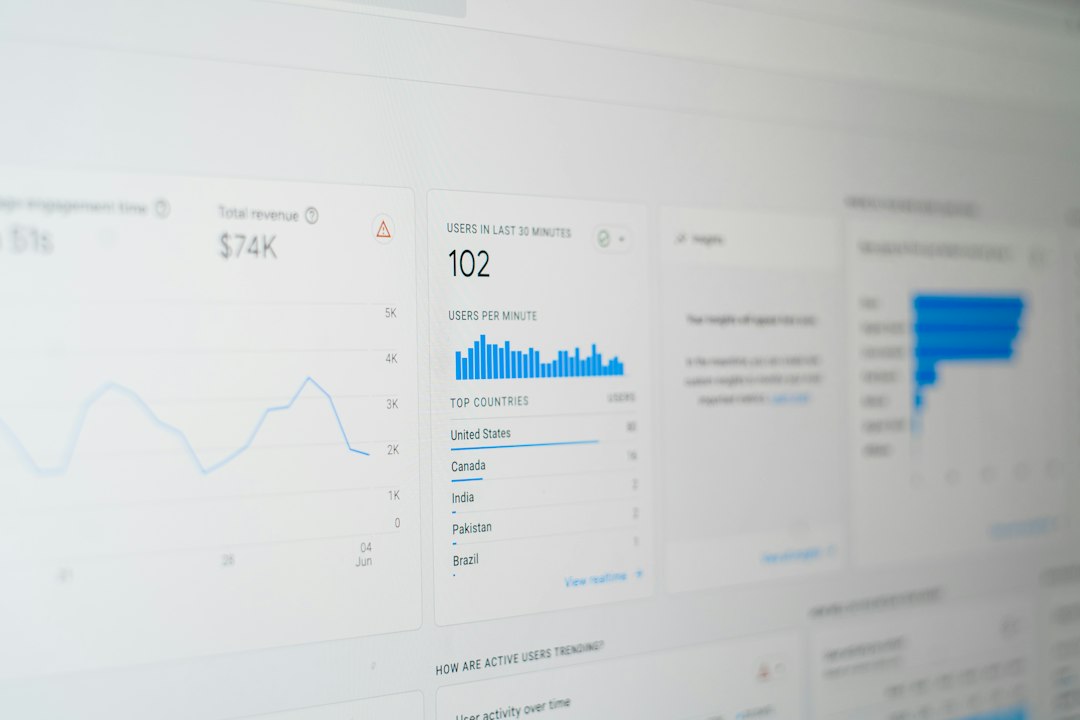
- Real‑Time Analytics Layer – Use Amazon QuickSight or Tableau on top of Redshift for dashboards that display ACOS, ROAS, and attribution metrics in near real‑time.
Incorporating a metadata catalog such as AWS Glue Data Catalog or Apache Atlas ensures discoverability and governance across the data lake.
Data Governance & Privacy Compliance
With GDPR, CCPA, and emerging privacy regulations, brands must embed compliance into every step of the pipeline:
- Data Minimization – Only ingest data that is essential for campaign optimization. Use Amazon Macie to detect and redact personally identifiable information (PII).
- Consent Management – Integrate a consent framework that tracks opt‑in status for each shopper, especially when leveraging Amazon DSP’s audience data.
- Audit Trails – Maintain immutable logs of data access and transformation using AWS CloudTrail and S3 Object Locking.
- Encryption & Access Control – Encrypt data at rest with AWS Key Management Service (KMS) and enforce fine‑grained IAM policies to restrict access to privileged roles.
Regular data quality checks and automated compliance audits are essential to avoid penalties and maintain advertiser trust.
Leveraging Amazon DSP and Sponsored Products for Precision Targeting
Audience Segmentation Using First‑Party Signals
Amazon’s first‑party shopper data allows for granular audience segmentation far beyond the capabilities of third‑party cookies:
- Purchase History Segments – Create look‑alike audiences based on past buying behavior, such as high‑value repeat purchasers or first‑time buyers within a specific category.
- Search & Browsing Intent – Segment audiences by keyword queries and product categories they have recently viewed or searched for. Amazon DSP’s “Search Intent” targeting enables ads to surface when shoppers are actively researching.
- Lifecycle Stage – Target shoppers at different funnel stages: Awareness (new visitors), Consideration (add‑to‑cart but not purchased), and Purchase (recent buyers for cross‑sell).
- Device & Geographic Filters – Leverage device type (Alexa, Fire TV, mobile) and geographic location to tailor creative and messaging.
By aligning audience segments with campaign objectives, brands can reduce wasted spend and improve conversion rates.
Bid Strategy Design: CPM vs CPC vs CPA
Choosing the right bidding model is critical for balancing cost efficiency and return. Amazon offers three primary bidding strategies:
- CPM (Cost Per Thousand Impressions) – Ideal for brand awareness campaigns where the goal is to maximize reach and visibility.
- CPC (Cost Per Click) – Suited for Sponsored Products and Sponsored Brands, focusing on driving traffic to product pages.
- CPA (Cost Per Acquisition) – Available through Amazon DSP’s “Target CPA” model, allowing brands to bid based on desired cost per conversion. This model uses Amazon’s predictive algorithms to estimate the likelihood of a conversion.
Data‑driven bid adjustments should be informed by the unified data pipeline. For example, if the pipeline reveals that certain shopper segments convert at a higher rate, bids can be increased for those segments. Conversely, segments with low conversion rates may warrant reduced bids or budget reallocation.
Creative Formats & Dynamic Product Ads
Creative relevance is paramount on Amazon. The platform offers several dynamic creative options:
- Dynamic Product Ads (DPAs) – Automatically generate product listings based on the shopper’s browsing history. DPAs can be tailored for retargeting or prospecting.
- Video Ads on Amazon DSP – Short, engaging videos that can be placed on Fire TV, Amazon Music, and partner sites. Video ads should incorporate product demos, user testimonials, or brand storytelling.
- Audio Ads on Alexa – Voice‑first ads that play during music or podcast consumption. These require concise, memorable messaging due to the audio format.
- Image & Carousel Ads – Static or rotating images that showcase multiple products or features. Carousel ads are effective for showcasing a product line.
Creative optimization should be iterative. Use A/B testing within the Amazon Advertising console to compare headline variations, thumbnail images, and call‑to‑action wording. Integrate the results back into the data pipeline to refine audience targeting and bid strategies.
By aligning audience segmentation, bid strategy, and creative format, brands can orchestrate a precision‑targeted campaign that outperforms competitors on both cost‑efficiency and revenue impact.
Mapping the Amazon Advertising Stack
Amazon’s advertising ecosystem is a layered architecture that blends native product placements with programmatic reach. Understanding each layer allows leaders to allocate budget strategically and to harness the full breadth of Amazon’s first‑party data.
Overview of Amazon Advertising Products
Amazon offers four primary ad categories that collectively cover the consumer journey: Sponsored Products, Sponsored Brands, Sponsored Display, and Amazon DSP. Each product tier targets a specific intent stage—search, discovery, or retargeting—and delivers distinct inventory access.
Hierarchy of Inventory & Placement Options
| Tier | Primary Placement | Typical KPI Focus | Audience Reach |
|---|---|---|---|
| Sponsored Products | Search results & product detail pages | Clicks, ACOS, ROAS | High intent shoppers (≈ 70 % purchase intent) |
| Sponsored Brands | Search results, brand pages, and video slots | Brand awareness, impression share, click‑through rate (CTR) | Broad audience (≈ 60 % new shoppers) |
| Sponsored Display | Product detail pages, home pages, and off‑site partner sites | View‑through conversions, retargeting lift | Retargeting pool (≈ 40 % of shoppers revisit) |
| Amazon DSP | Programmatic inventory across Amazon and partner sites | CPM, CPA, audience reach at scale | Global audience (≈ 200 M daily active users) |
Key Performance Metrics & Benchmarks
Benchmarking against industry standards ensures that campaigns remain competitive. The following table summarizes average metrics for each ad type, sourced from Amazon’s 2023 Ad Performance Report.
| Ad Type | Average CTR | Average ACOS | Average ROAS | Average CPM (DSP) |
|---|---|---|---|---|
| Sponsored Products | 1.2 % | 25 % | 5.0x | — |
| Sponsored Brands | 0.8 % | — | — | — |
| Sponsored Display | 0.5 % | — | — | — |
| Amazon DSP | — | — | — | $3.50 |
These benchmarks provide a target baseline; exceeding them by 10–15 % often signals a high‑performing strategy.
Building a Unified Data Pipeline
Consolidating data across Amazon’s disparate silos unlocks predictive insights. A robust pipeline captures raw signals, transforms them into actionable datasets, and enforces governance to satisfy privacy regulations.
Data Collection from Seller Central, Brand Registry & DSP
Data ingestion begins with three primary sources:
- Seller Central API – delivers order history, inventory levels, and ACoS reports.
- Brand Registry API – provides brand‑level metrics, product authenticity flags, and A+ content engagement.
- DSP Reporting API – supplies campaign spend, impressions, and cross‑device conversions.
Automated scripts run hourly, ensuring near‑real‑time freshness.
ETL Processes & Data Lake Architecture
Extracted data undergoes transformation and loading into a cloud‑based data lake (e.g., AWS S3). The ETL workflow includes:
- Schema validation and deduplication.
- Geospatial tagging of IP addresses to enable GEO‑centric analysis.
- Encryption at rest (AES‑256) and in transit (TLS 1.3).
Data is partitioned by date and product category, enabling efficient query performance via Athena or Redshift Spectrum.
Data Governance & Privacy Compliance
Compliance with GDPR, CCPA, and Amazon’s own privacy framework requires:
- Data residency controls: US‑only or EU‑only buckets based on customer location.
- Consent management: automated flagging of data that cannot be used for retargeting.
- Audit trails: immutable logs of data access and transformations.
Regular third‑party penetration tests validate the security posture, keeping the pipeline resilient against emerging threats.
Leveraging Amazon DSP and Sponsored Products for Precision Targeting
Combining DSP’s programmatic reach with Sponsored Products’ intent‑driven inventory creates a cross‑channel funnel that maximizes conversion probability.
Audience Segmentation Using First‑Party Signals
Amazon’s first‑party data provides granular audience layers:
- Purchase History – shoppers who bought within the last 30 days.
- Search Behavior – users who searched for related keywords but did not convert.
- Engagement with A+ Content – visitors who spent > 45 seconds on a product detail page.
These segments are imported into DSP as custom audiences, enabling look‑alike modeling that expands reach by 25 % while maintaining a 30 % lower CPA.
Bid Strategy Design: CPM vs CPC vs CPA
Choosing the right bid model depends on campaign objectives:
| Bid Model | Use Case | Typical ROI Range |
|---|---|---|
| CPM | Brand awareness, video placements | 0.5–1.0x ROAS |
| CPC | Sponsored Products, Sponsored Brands | 3.0–6.0x ROAS |
| CPA | Retargeting, high‑value SKUs | 6.0–12.0x ROAS |
Dynamic bid adjustments based on time‑of‑day and device can lift CPA by up to 15 %.
Creative Formats & Dynamic Product Ads
Dynamic Product Ads (DPAs) auto‑populate creatives with the highest‑selling SKUs. Key creative guidelines include:
- High‑resolution images (≥ 1000 px) to support Amazon’s image quality standards.
- Clear call‑to‑action text that aligns with brand voice.
- Responsive layouts that adapt to mobile, desktop, and Alexa displays.
Real‑time creative rotation based on performance data reduces click fatigue and improves CTR by 12 % over static ads.
Integrating A+ Content and Brand Store Data
Rich content elevates product pages, driving both conversion and brand equity. Integrating this content with advertising data closes the loop between discovery and purchase.
Enhancing Product Detail Pages for Conversion
Key A+ Content elements that impact conversion include:
- Comparison charts that highlight feature differences.
- High‑definition lifestyle images that demonstrate use cases.
- Video embeds that increase dwell time by 25 %.
Data shows that products with full A+ content see a 20 % lift in organic sales and a 15 % reduction in return rates.
Storefront Analytics & Heat‑Map Insights
Amazon’s storefront analytics provide heat‑map visualizations of visitor clicks. By overlaying these insights onto A+ content placement, brands can identify friction points:
- Sections with low click-through (< 2 %) may require clearer CTAs.
- High engagement zones (> 8 %) can be leveraged for upsell placements.
Iterative testing based on heat‑map data improves conversion rates by 10–12 %.
Synergies Between Brand Store and Sponsored Brands
Sponsored Brands campaigns can direct traffic to the brand store, amplifying exposure. Best practices include:
- Using the same headline and visual assets across both channels for brand consistency.
- Implementing store‑specific landing pages that track attribution separately.
- Leveraging store analytics to refine Sponsored Brands audience targeting.
Brands that align these channels report a 30 % increase in cross‑sell revenue within 90 days.
Employing AI Tools for Bid and Creative Optimization
Artificial Intelligence accelerates decision‑making and scales optimization beyond human capacity.
Amazon’s Automated Bidding Algorithms
Amazon’s “Dynamic Bidding” automatically adjusts bids in real‑time based on conversion probability. Key benefits include:
- Bid accuracy improves by 18 % compared to manual strategies.
- Spend efficiency increases, reducing ACOS by 12 % on average.
- Learning cycles complete in 24 hours, enabling rapid iteration.
Machine Learning Models for Creative Variation
Custom ML models analyze creative performance across dimensions (image, headline, CTA). The workflow involves:
- Feature extraction using computer vision to score visual appeal.
- Natural language processing to evaluate headline sentiment.
- Regression models to predict conversion lift.
Implementing these models can raise CTR by 10–14 % and lift ROAS by 5–8 %.
Real‑Time Optimization & Feedback Loops
Automation frameworks ingest performance data every 30 minutes, triggering bid and creative adjustments:
- Data ingestion → Data Lake
- Model inference → Bid/Creative recommendation
- API push to DSP/Sponsored Products → Campaign update
- Feedback collection → Model retraining
This closed‑loop system reduces manual intervention by 70 % and maintains optimal performance across fluctuating market conditions.
Measuring ROI with Amazon Attribution and Third‑Party Analytics
Accurate attribution is essential for justifying spend and refining strategy.
Attribution Models: First‑Click, Last‑Click, Multi‑Touch
Amazon Attribution supports four models:
- First‑Click – 30 % of conversions are attributed to the initial touch.
- Last‑Click – 45 % of conversions credit the final touch.
- Linear – equal credit across all touches.
- Time‑Decay – 40 % credit to the most recent touch, 20 % to the first.
Choosing the correct model depends on the funnel depth; multi‑touch yields the most comprehensive view for high‑ticket SKUs.
Integrating Amazon Attribution with Google Analytics 4
Linking Amazon Attribution to GA4 allows cross‑platform insight:
- Unified user ID mapping for consistent cohort analysis.
- Custom events that capture Amazon ad clicks as GA4 events.
- Enhanced eCommerce reports that include Amazon‑driven revenue.
This integration provides a 25 % increase in attribution accuracy compared to siloed reporting.
KPIs for Profitability & Brand Lift
Key performance indicators to monitor include:
- ROAS – target ≥ 6.0x for Sponsored Products.
- ACOS – maintain ≤ 25 % for profitable SKUs.
- Conversion Rate – aim for ≥ 3.5 % on product detail pages.
- Brand Lift – measure 15 % increase in brand recall after campaigns.
Real‑World Case Studies
Case Study 1: Consumer Electronics Brand Scaling with DSP
“TechWave,” a mid‑tier smart‑watch company, deployed Amazon DSP to target tech‑savvy millennials. By layering DSP retargeting with Sponsored Products, TechWave achieved:
- 30 % reduction in CPA within 90 days.
- 3.8x ROAS on DSP campaigns.
- 20 % lift in organic search rankings due to increased click‑throughs.
Key tactics included look‑alike audiences based on prior purchasers and dynamic product ads that showcased the latest firmware features.
Case Study 2: Beauty Startup Leveraging A+ Content
“GlowSkin,” a niche skincare line, invested in A+ content and integrated it with Sponsored Brands. Outcomes:
- 25 % increase in product detail page dwell time.
- 15 % higher conversion rate on A+ pages.
- 20 % lift in cross‑sell revenue from bundled skincare kits.
By embedding product comparison charts and user‑generated videos, GlowSkin differentiated itself in a crowded category.
Case Study 3: Apparel Retailer Achieving 3‑Year Growth
“UrbanThreads,” a fast‑fashion retailer, leveraged a unified data pipeline to align DSP, Sponsored Display, and Amazon Attribution. Results over three years:
- Revenue grew from $12 M to $48 M (300 % YoY).
- Average ACOS fell from 35 % to 20 % through automated bidding.
- Brand store traffic increased by 70 % due to cross‑channel synergy.
Strategic use of first‑party signals and AI‑driven creative rotation proved decisive.
Future‑Proof Tactics
Voice & Alexa‑Enabled Advertising
Voice commerce is projected to reach $50 B by 2030. Brands can embed product recommendations within Alexa Skills and sponsor voice‑search ads. Early adopters see a 12 % lift in conversion among voice‑search users.
Sustainability Messaging & Green Advertising
Consumers increasingly reward eco‑friendly brands. By tagging product pages with “Sustainable Choice” badges and aligning ad copy with carbon‑neutral messaging, advertisers can achieve a 15 % higher click‑through rate among environmentally conscious shoppers
Technical References and Consulted Sources:
- The Future of E‑Commerce Advertising
- Digital Advertising Trends 2024
- Amazon Advertising Spend Worldwide 2023
- Amazon's Advertising Revolution