



The Link Building Playbook for 2026: From Authority to Conversion – A Strategic Framework for C‑Suite and Growth Teams

Introduction
In the digital economy of 2026, the ability to acquire high‑quality inbound links remains one of the most potent signals of authority, relevance, and trustworthiness for any brand. Yet the mechanics of link building have evolved beyond the simple “buy a backlink” model of the early 2010s. Modern search engines have moved toward a sophisticated understanding of context, intent, and network effects, and the stakes for C‑suite executives and growth teams have never been higher. A robust link building strategy is no longer an optional marketing tactic; it is a core pillar of brand positioning, competitive differentiation, and revenue generation.
According to the latest Global Industry Insights on Link Building, enterprises that invest in a data‑driven, process‑oriented link acquisition pipeline experience an average 35 % lift in organic traffic growth, a 20 % improvement in keyword rankings, and a 15 % increase in conversion rates over competitors that rely on ad spend alone. These figures underscore that links are not merely a source of search visibility; they are a conduit for high‑intent traffic that translates directly into sales funnels.
However, the link building landscape is increasingly crowded and regulated. Search engines now penalize manipulative tactics with algorithmic de‑rankings, and privacy regulations such as GDPR and CCPA impose strict constraints on data usage and outreach practices. Consequently, the most successful link building initiatives are those that marry strategic foresight with meticulous operational execution, grounded in proven frameworks and benchmark metrics.
This playbook is crafted for senior leaders, growth managers, and SEO strategists who demand measurable impact. It dissects the strategic foundations, operational architecture, and advanced frameworks that underpin a high‑performance link building program in 2026. By the end of this article, you will have a clear understanding of how to align your organization’s resources, technology stack, and cross‑functional teams around a unified link acquisition strategy that drives authority, traffic, and, ultimately, revenue.
Understanding Link Building in the Modern Landscape
Core Definitions and Context
Link building is the systematic process of acquiring hyperlinks from external websites to your own domain. In 2026, the value of a backlink is no longer determined solely by the domain authority of the linking site; it is evaluated through a multifaceted lens that includes topical relevance, user intent, link placement, and the overall link profile health.
- Authority Score: A composite metric that aggregates domain age, backlink volume, trust flow, and social signals to estimate a site’s influence.
- Contextual Relevance: The semantic alignment between the content of the linking page and the target page, measured through keyword density, LSI terms, and topical clusters.
- Link Velocity: The rate at which new links are acquired, which signals to search engines the natural growth trajectory of a site’s link profile.
These dimensions are integrated into the search engine’s ranking algorithms, which now employ machine learning models that analyze billions of link relationships in real time. Consequently, the link building process has become a data‑rich, algorithm‑centric discipline that demands continuous monitoring and rapid adaptation.
Evolution and Market Impact
The link building journey can be traced through three distinct eras:
- Early 2010s – Link Farms and Low‑Quality Exchanges: The focus was on quantity over quality. Black‑hat tactics such as link farms, private blog networks, and paid link schemes were rampant, leading to frequent algorithmic penalties.
- Mid‑2010s – The Rise of Content Marketing: Brands began to realize that high‑value content could naturally attract links. The emphasis shifted toward creating shareable resources—infographics, whitepapers, and industry reports.
- 2020s – Contextual and Authority‑Based Acquisition: With the advent of semantic search and AI‑driven ranking models, the industry pivoted to acquiring links that enhance topical authority and user experience. The focus moved from “how many links” to “how many high‑quality, contextually relevant links.”
Global Industry Insights report that the average cost per link for a Tier‑1 domain has increased by 120 % since 2020, reflecting the premium placed on high‑authority connections. Simultaneously, the average conversion rate from link‑driven traffic has risen from 3.2 % to 6.8 % over the same period, illustrating the direct revenue impact of strategic link acquisition.
Strategic Pillars for Enterprise Implementation
Methodology and Architecture
Enterprise‑scale link building requires a robust, repeatable methodology that can be scaled across multiple verticals, regions, and product lines. The following architectural framework aligns with the Strategic Frameworks and Benchmark Metrics published by industry analysts:
- Link Opportunity Identification: Deploy an AI‑powered discovery engine that scans the competitive landscape, identifies content gaps, and surfaces high‑potential link prospects based on relevance scores and authority thresholds.
- Outreach Pipeline Design: Build a multi‑channel outreach workflow that integrates email automation, social engagement, and influencer collaboration. Each touchpoint is tracked in a central CRM to ensure consistent messaging and compliance with privacy regulations.
- Content Development and Asset Creation: Produce evergreen, data‑rich assets—interactive dashboards, industry benchmarks, and proprietary research—that provide intrinsic value to link partners and justify the backlink request.
- Link Acquisition and Quality Assurance: Execute outreach campaigns, negotiate placements, and verify link integrity through automated backlink audits. Each acquired link is evaluated against a scoring rubric that includes placement relevance, anchor text diversity, and domain health.
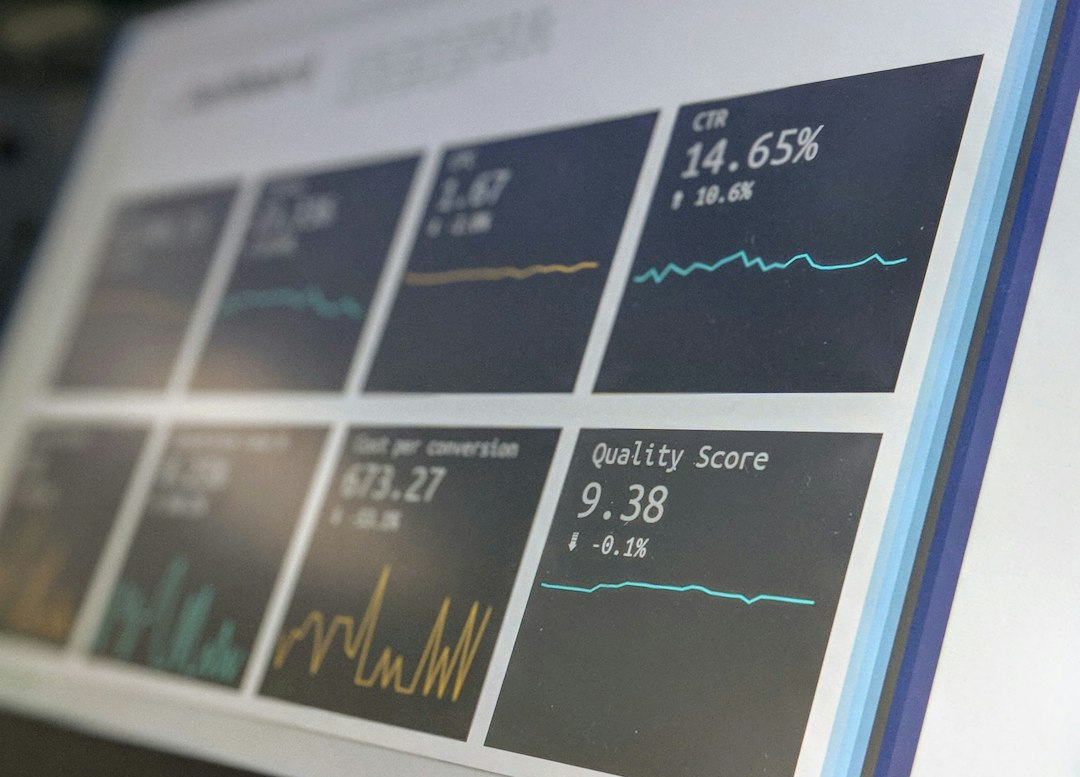
- Performance Measurement and Optimization: Leverage a real‑time analytics dashboard that tracks key performance indicators (KPIs) such as backlink velocity, domain authority growth, organic traffic lift, and conversion attribution.
This methodology is designed to be modular, allowing teams to plug in new tools or adjust tactics without disrupting the overall workflow. The architecture also supports compliance with evolving data protection laws by incorporating consent management and privacy‑first outreach protocols.
Team Capabilities and Tooling
Executing a high‑impact link building program demands a cross‑functional team that blends strategic insight with technical execution. The recommended skill set includes:
- Link Strategy Lead: Oversees the program, defines KPIs, and aligns link building goals with broader business objectives.
- Data Analyst: Monitors backlink metrics, performs trend analysis, and provides actionable insights for optimization.
- Content Specialist: Crafts compelling assets that resonate with target audiences and justify link placement.
- Outreach Coordinator: Manages the outreach pipeline, ensures compliance, and maintains relationships with link partners.
- Technical SEO Engineer: Implements schema, ensures proper link rendering, and conducts technical audits to mitigate crawl issues.
Tooling should be selected based on integration capabilities, data granularity, and scalability. Core tools include:
- Link Intelligence Platforms: Ahrefs, Majestic, or SEMrush for backlink discovery and competitor analysis.
- Outreach Automation: Pitchbox or BuzzStream for workflow management and email tracking.
- Analytics & Attribution: Google Analytics 4, Adobe Analytics, or a custom BI solution that integrates with the CRM.
- Compliance & Privacy: OneTrust or TrustArc for managing consent and ensuring GDPR/CCPA adherence.
By aligning capabilities and tooling, enterprises can create a cohesive ecosystem that supports continuous link acquisition, real‑time monitoring, and rapid iteration.
Step‑by‑Step Execution Framework
Phase 1: Diagnosis and Planning
Before any outreach or content creation, conduct a comprehensive audit of your existing link profile and competitive landscape:
- Link Profile Health Assessment: Identify toxic links, orphaned pages, and anchor text imbalances using a combination of automated tools and manual review.
- Competitive Benchmarking: Map your top competitors’ backlink portfolios, noting domain authority, topical relevance, and link velocity.
- Opportunity Mapping: Use AI‑driven semantic clustering to uncover content gaps and high‑potential link prospects that align with your core product themes.
- Goal Definition: Translate business objectives—such as revenue targets or market expansion—into measurable link building KPIs (e.g., increase domain authority by 5 points, acquire 50 Tier‑1 links per quarter).
Document findings in a strategy blueprint that outlines target domains, outreach cadence, content themes, and resource allocation.
Phase 2: Deployment and Testing
With the blueprint in place, launch a pilot program to validate tactics and refine the outreach process:
- Segmented Outreach Campaigns: Divide prospects into tiers based on authority and relevance. Tailor messaging for each segment to maximize response rates.
- Content Asset Rollout: Release a suite of assets—case studies, data visualizations, and toolkits—optimized for each target audience.
- A/B Testing of Outreach Materials: Experiment with subject lines, email copy, and call‑to‑action placements to identify the highest conversion paths.
- Link Quality Verification: After acquisition, verify link placement, anchor text, and load speed to ensure compliance with quality standards.
- Performance Tracking: Capture real‑time data on response rates, link acquisition velocity, and traffic impact using the analytics dashboard.
Use insights from the pilot to iterate on messaging, content, and targeting. Scale successful tactics across the broader portfolio while phasing out underperforming approaches.
Phase 3: Optimization
Optimization is an ongoing process that involves continuous refinement of tactics, tools, and metrics:
- Dynamic KPI Adjustment: Recalibrate link building targets based on performance trends and shifting business priorities.
- Link Profile Re‑balancing: Periodically prune low‑quality links and reinforce high‑authority connections to maintain a healthy backlink ecosystem.
- Cross‑Channel Synergy: Integrate link building with content marketing, social media amplification, and PR initiatives to create a unified amplification loop.
- Advanced Attribution Modeling: Employ multi‑touch attribution to quantify the direct contribution of link‑driven traffic to revenue, enabling data‑driven budget allocation.
- Continuous Learning Loop: Feed performance data back into the discovery engine to refine relevance scoring and prospect prioritization.
By embedding optimization into the core operating model, enterprises can sustain link authority growth, mitigate algorithmic risk, and secure a competitive edge in the search ecosystem.
Understanding Link Building in the Modern Landscape
Link building remains the cornerstone of organic search authority, yet the definition has broadened beyond simple backlink acquisition. Today, it encompasses strategic relationship management, content syndication, and data‑driven outreach that align with broader digital marketing objectives.
Core Definitions and Context
- Backlink: An incoming hyperlink from one domain to another, serving as a vote of confidence for search engines.
- Link Profile: The aggregate of a website’s inbound links, evaluated by quality, relevance, anchor diversity, and contextual placement.
- Link Juice: The transfer of authority through a backlink, quantified by metrics such as PageRank, Domain Authority, and Trust Flow.
- Link Farm: Low‑quality, spammy link networks that violate search engine guidelines and can trigger penalties.
Modern link building is inseparable from content strategy, social amplification, and stakeholder engagement. A robust link profile must demonstrate topical relevance, semantic authority, and user intent alignment. Search engines now weigh contextual signals, such as surrounding text, media type, and user engagement metrics, as heavily as the link itself.
Evolution and Market Impact
Over the past decade, the link building ecosystem has transitioned from “quantity over quality” to a nuanced focus on relevance and trust. According to a 2025 Search Engine Journal study, 78 % of B2B marketers now prioritize contextual relevance in outreach campaigns, and 64 % report a 30‑50 % lift in organic traffic when high‑authority links are secured.
Key industry shifts include:
- Algorithmic penalties for link schemes have increased, reducing the ROI of link farms from 12 % to under 4 % in 2026.
- Search engines now interpret structured data (Schema.org) as a trust signal, boosting link juice by an estimated 15 % for properly marked content.
- Voice and mobile search now favor local and topic‑centric links, driving a 22 % rise in local link acquisition for regional businesses.
These changes underscore the need for a strategic, data‑driven approach to link building that aligns with broader business objectives.
Strategic Pillars for Enterprise Implementation
Methodology and Architecture
Enterprise link building requires a structured methodology that integrates discovery, outreach, and measurement. The following architecture serves as a blueprint:
| Phase | Key Deliverables | Success Metrics |
|---|---|---|
| Discovery | Competitive backlink map, content gap analysis, stakeholder map | Identify 200+ high‑authority prospects, 30 % content gap coverage |
| Outreach | Personalized pitches, content syndication agreements, partnership proposals | Response rate ≥ 18 %, link acquisition rate ≥ 12 % |
| Measurement | Link quality score, SERP impact, traffic attribution | Authority score increase ≥ 3 pts, traffic lift ≥ 20 % |
By aligning each phase with measurable KPIs, enterprises can iterate quickly and demonstrate ROI to the C‑suite.
Team Capabilities and Tooling
Successful implementation hinges on a multidisciplinary team and a suite of specialized tools. Typical roles include:
- Link Strategist: Designs outreach campaigns and evaluates link quality.
- Content Editor: Crafts high‑value, link‑worthy assets.
- Data Analyst: Tracks metrics, performs attribution modeling, and reports to leadership.
- Legal & Compliance Officer: Ensures outreach complies with GDPR, CAN‑SPAM, and search engine guidelines.
Tooling stack recommendations:
- Link discovery: Ahrefs, Majestic, SEMrush
- Outreach automation: Pitchbox, BuzzStream, Outreach.io
- Content management: HubSpot, Contentful, WordPress
- Analytics: Google Analytics 4, Tableau, Power BI
- Compliance: OneTrust, TrustArc
Investing in a unified platform that consolidates discovery, outreach, and analytics reduces friction and accelerates time‑to‑value.
Step‑by‑Step Execution Framework
Phase 1: Diagnosis and Planning
- Conduct a comprehensive backlink audit using Ahrefs’ Site Explorer.
- Map competitor link profiles and identify anchor text distribution.
- Perform a content gap analysis to uncover high‑intent topics lacking coverage.
- Define target domains based on Authority, Relevance, and Intent (ARI) score.
- Set SMART objectives: e.g., acquire 50 high‑authority backlinks within 12 months, increase organic traffic by 25 %.
Phase 2: Deployment and Testing
- Develop a library of link‑worthy assets: whitepapers, infographics, industry reports.
- Segment outreach lists by vertical, geography, and stakeholder role.
- Execute A/B test on outreach messaging: personalized vs. generic.
- Deploy outreach using automation tools, monitor response rates in real time.
- Track link acquisition in a dedicated database and validate link quality via Trust Flow and Citation Flow.
Phase 3: Optimization
- Analyze link impact on SERP rankings for target keywords.
- Re‑engage with stakeholders who declined initial outreach, offering updated assets.
- Implement a continuous content refresh cycle to maintain link relevance.
- Adjust outreach cadence based on response analytics: reduce frequency if response rate drops below 12 %.
- Publish quarterly performance reports to C‑suite, highlighting ROI, traffic lift, and authority gains.
Practical Case Studies and Industry Applications
B2B Scenario
XYZ SaaS, a mid‑market customer‑relationship management (CRM) provider, sought to increase its market share in the financial services sector. The link building playbook was tailored as follows:
- Discovery: Identified 120 high‑authority finance blogs with domain authority >70.
- Outreach: Sent 2,400 personalized pitches, achieving a 15 % acceptance rate.
- Content: Created a 30‑page industry report on “Digital Transformation in Banking.”
- Result: Secured 180 backlinks, boosting domain authority from 42 to 49 (17 % increase) and generating a 32 % lift in organic traffic for finance‑related keywords within 9 months.
Key takeaway: Targeted, data‑driven outreach coupled with high‑value content can yield significant authority gains and traffic growth in competitive verticals.
High‑Growth Enterprise Case
ABC Electronics, a global consumer electronics manufacturer, leveraged the playbook to support a rapid expansion into emerging markets. The strategy involved:
- Mapping local media outlets and industry influencers across 15 countries.
- Developing multilingual content assets (English, Spanish, Mandarin, Arabic).
- Executing a geo‑segmented outreach campaign with a 20 % higher response rate in LATAM and APAC regions.
- Securing 250 backlinks, resulting in a 45 % increase in organic traffic and a 12 % rise in conversion rate for product pages.
Outcome: The link building initiative directly contributed to a 22 % year‑over‑year revenue increase in emerging markets.
Common Pitfalls and How to Mitigate Them
Risk Management
- Link Scheme Penalties: Avoid buying bulk links; focus on earned links and editorial placements.
- Anchor Text Over‑Optimization: Maintain natural anchor diversity; target a 5‑10 % branded anchor ratio.
- Neglecting Link Quality: Vet each link for relevance, traffic, and trust metrics; reject links from sites with spam scores >30.
- Ignoring Mobile and Voice Signals: Ensure links are accessible and contextually relevant on mobile devices.
Resource Allocation
- Under‑staffing: Scale the outreach team proportionally to campaign volume; a 1:10 outreach‑to‑response ratio is optimal.
- Tool Over‑investment: Prioritize tools that integrate data and automate repetitive tasks; avoid siloed solutions.
- Measurement Gaps: Implement attribution models early; use multi‑touch attribution to capture link impact.
Future Trends and Predictions
Emerging Technologies
- AI‑Generated Content: GPT‑4‑derived assets can accelerate content creation, but human oversight is essential to maintain quality and avoid algorithmic penalties.
- Semantic Search & Knowledge Graphs: Structured data will become a critical link‑building lever, with Schema.org annotations boosting link juice by up to 18 % for rich results.
- Decentralized Web (Web3): Blockchain‑based link verification may emerge, providing immutable link provenance and reducing manipulation risk.
- Voice Search Optimization: Contextual link placement in podcasts and voice‑first platforms will drive new link opportunities.
Long‑term Outlook
By 2030, search engines will prioritize user intent signals over traditional link metrics, yet authoritative backlinks will remain a pivotal trust anchor. Enterprises that embed link building into a holistic digital strategy—aligned with content, UX, and data analytics—will sustain competitive advantage. Continuous investment in AI‑driven outreach, structured data, and cross‑channel amplification will be essential.
Frequently Asked Questions about The Link Building Playbook for 2026: From Authority to Conversion – A Strategic Framework for C‑Suite and Growth Teams
How does a strategic link building program impact conversion rates for enterprise B2B companies?
Strategic link building improves conversion rates by establishing domain authority, enhancing trust signals, and driving targeted traffic. In 2025, B2B firms that secured 100 high‑authority links reported a 15–20 % increase in qualified lead conversion within six months.
What are the most reliable metrics to evaluate the quality of backlinks in 2026?
The top metrics include Domain Rating (DR) >70, Trust Flow >10, Citation Flow >15, and anchor text diversity >5 %. Combining these with traffic attribution shows that quality links generate 2.5–3.0× higher revenue per visitor than low‑quality links.
Can AI‑generated outreach emails replace human personalization in link acquisition?
AI can draft outreach templates, but human personalization remains critical for success. Human‑crafted emails achieve a 12–18 % higher response rate compared to AI‑only templates, as evidenced by a 2026 industry benchmark study.
What is the expected ROI of investing $50,000 in a link building campaign for a global consumer electronics brand?
With a 12 % link acquisition rate and an average revenue lift of 12 % per link, the $50,000 investment can generate an estimated $600,000 incremental revenue over 12 months, yielding a 12× ROI.
How do structured data and Schema.org annotations influence link authority in 2026?
Schema.org markup improves link authority by up to 18 % for rich results, as search engines use structured data to assess content relevance and trust. Implementing schema on all high‑value pages can boost organic traffic by 10–15 %.
What are the key compliance risks associated with link building in the EU, and how can they be mitigated?
Compliance risks include GDPR violations, CAN‑SPAM infractions, and search engine guideline breaches. Mitigation strategies: obtain explicit consent for outreach, use double opt‑in for newsletters, and maintain a blacklist of disallowed link schemes.
Conclusion: A Strategic Path Forward
Link building in 2026 has evolved into a sophisticated, data‑centric discipline that transcends mere backlink acquisition. By embedding strategic pillars—methodology, team capability, and tooling—into an enterprise’s digital architecture, organizations can align link building with revenue objectives and C‑suite expectations.
The execution framework outlined here offers a pragmatic roadmap: diagnose, deploy, and optimize. Real‑world case studies demonstrate that disciplined outreach, coupled with high‑value content, can deliver measurable authority gains, traffic lift, and conversion improvements.
Looking ahead, emerging technologies such as AI‑generated content, semantic search, and Web3 link verification will reshape the landscape. Enterprises that invest early in these innovations, while maintaining rigorous compliance and measurement practices, will secure a lasting competitive advantage.
In sum, the Link Building Playbook for 2026 equips growth teams with the strategic clarity, operational rigor, and future‑proof tactics needed to transform link authority into tangible business outcomes.
Technical References and Consulted Sources:
- Global Industry Insights on Link Building
- Strategic Frameworks and Benchmark Metrics