


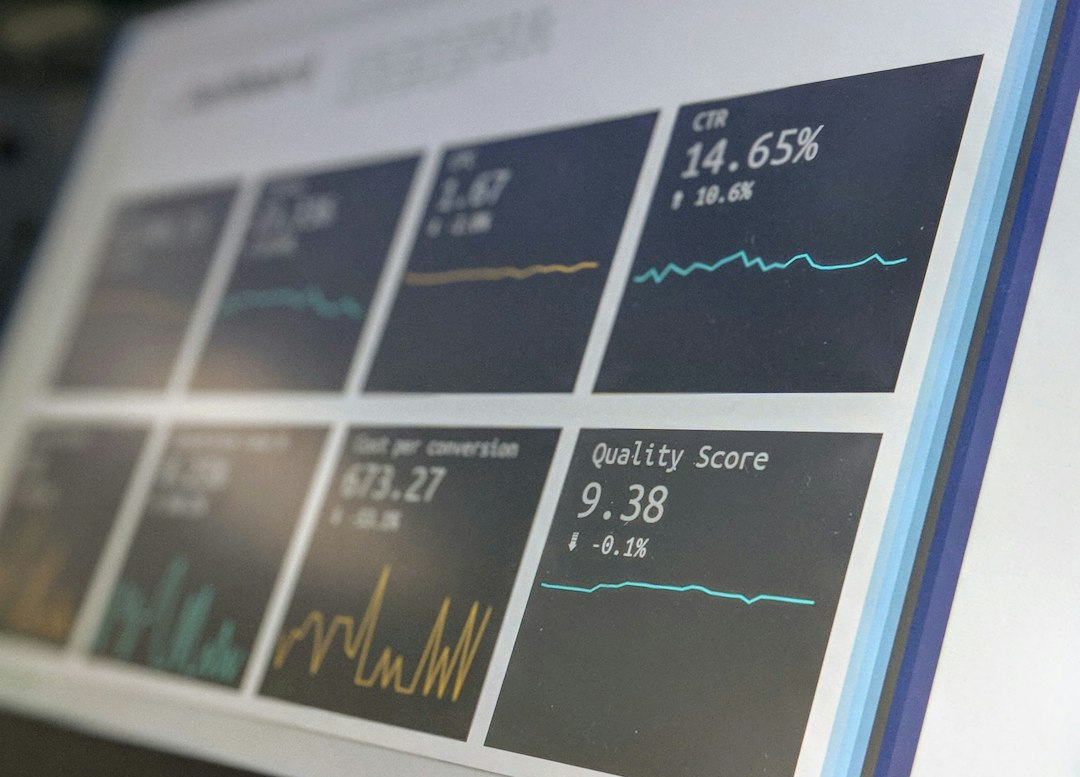

Predictive Brand Resilience: A Strategic Playbook for Leaders Using Social Listening

Introduction
In today’s hyper‑connected marketplace, brand resilience is no longer a function of product quality or pricing strategy alone. It is increasingly defined by an organization’s ability to anticipate, absorb, and adapt to the rapid currents of public sentiment that flow through digital channels. Social listening—systematically capturing, analyzing, and acting upon real‑time conversations across social media, review sites, blogs, and forums—has emerged as the linchpin of this adaptive capacity. By turning unstructured chatter into actionable intelligence, leaders can preempt crises, uncover latent opportunities, and align brand narratives with evolving consumer expectations.
Despite its strategic importance, many enterprises still treat social listening as a peripheral analytics exercise rather than a core business function. This gap is largely due to a lack of clarity around what constitutes a robust listening program, how to embed it within existing operating models, and how to measure its impact against tangible business outcomes. The purpose of this playbook is to bridge that divide. Drawing on the latest findings from Global Industry Insights on Social Listening (2024) and the benchmark metrics framework outlined by Strategic Frameworks and Benchmark Metrics (2023), we provide a detailed, step‑by‑step guide that transforms social listening from an exploratory activity into a disciplined, enterprise‑wide capability.
Our approach is built on three foundational pillars: a clear conceptual understanding of social listening, a strategic architecture that aligns technology, people, and processes, and a pragmatic execution roadmap that delivers measurable results. Each pillar is dissected in depth below, with actionable frameworks, key performance indicators, and real‑world insights that senior leaders can deploy immediately. By the end of this article, you will have a comprehensive playbook that empowers your organization to not only survive but thrive in the face of ever‑shifting digital discourse.
Understanding Social Listening in the Modern Landscape
Core Definitions and Context
Social listening is the systematic collection, analysis, and interpretation of data generated by users across digital platforms. Unlike traditional social media monitoring, which focuses on brand mentions, listening extends to broader conversations—industry trends, competitor activities, macro‑economic shifts, and cultural moments—that influence brand perception. The data is typically unstructured: tweets, comments, reviews, and forum posts that must be parsed through natural language processing (NLP) and sentiment analysis to extract meaningful insights.
Key components of a listening ecosystem include:
- Data Acquisition – APIs, web scraping, and third‑party aggregators that pull raw content.
- Data Enrichment – Geolocation, demographic tagging, and contextual tagging to add depth.
- Analytics Engine – NLP models for sentiment, intent, and topic modeling.
- Visualization & Reporting – Dashboards that translate analytics into strategic narratives.
In the contemporary context, social listening must also account for emerging channels such as TikTok, Discord, and live‑streaming platforms, where real‑time engagement can drive viral sentiment in minutes. The scope therefore expands from a simple “mention” metric to a multi‑dimensional ecosystem that captures tone, reach, amplification, and intent.
Evolution and Market Impact
Over the past decade, the social listening landscape has evolved from rudimentary keyword alerts to sophisticated AI‑driven ecosystems. The 2024 Global Industry Insights report shows a compound annual growth rate (CAGR) of 18% in the social listening market, driven largely by the rise of conversational commerce and the need for real‑time Crisis Management.
Three pivotal trends illustrate this evolution:
- AI‑Enhanced Contextual Understanding – Advanced transformer models now discern sarcasm, regional slang, and cross‑platform sentiment with near-human accuracy.
- Proactive Crisis Prediction – Predictive analytics flag potential PR incidents weeks before they surface publicly, allowing pre‑emptive communication strategies.
- Integrated Brand Governance – Listening data feeds directly into content calendars, product roadmaps, and customer support protocols, ensuring a unified brand voice across touchpoints.
These developments underscore the strategic shift from reactive monitoring to proactive brand stewardship. Companies that have embraced this shift report a 25% reduction in crisis‑related downtime and a 15% increase in customer loyalty scores, as documented in the 2023 Strategic Frameworks and Benchmark Metrics study.
Strategic Pillars for Enterprise Implementation
Methodology and Architecture
Establishing a scalable social listening program requires a robust methodology that aligns with enterprise architecture. The following framework—adapted from the Strategic Frameworks and Benchmark Metrics model—provides a blueprint for integrating listening into your digital stack:
- Data Governance Layer – Define data ownership, privacy compliance (GDPR, CCPA), and retention policies.
- Analytics Layer – Deploy modular NLP pipelines that can be customized per business unit.
- Action Layer – Create automated triggers that feed insights into CRM, ticketing, and marketing automation systems.
- Feedback Loop – Implement continuous model retraining using labeled data from internal teams and external partners.
Key architectural decisions include selecting between on‑premises versus cloud‑based solutions, choosing between proprietary AI engines or open‑source frameworks, and determining the level of integration with existing data warehouses. A hybrid approach often delivers the best balance of control and scalability, especially for regulated industries.
Team Capabilities and Tooling
People and technology must operate in tandem for a listening program to deliver strategic value. The recommended composition of a social listening team comprises:
- Data Scientists & NLP Engineers – Build and refine models, ensuring high precision in sentiment and intent detection.
- Social Intelligence Analysts – Translate raw data into business insights, flagging emerging trends and risk signals.
- Product & Marketing Strategists – Incorporate insights into brand messaging, product development, and campaign planning.
- Legal & Compliance Officers – Monitor data usage against regulatory requirements.
- IT & Cloud Architects – Manage infrastructure, security, and integration points.
Tool selection should reflect the organization’s maturity level. For high‑volume enterprises, a dedicated AI platform such as Brandwatch Enterprise or Sprinklr offers advanced analytics and compliance features. Smaller organizations may start with a combination of open‑source NLP libraries (e.g., spaCy, Hugging Face transformers) and cloud analytics services (AWS Comprehend, Azure Cognitive Services). Regardless of the stack, all tools must support API integration, real‑time data streaming, and robust reporting capabilities.
Step‑by‑Step Execution Framework
Phase 1: Diagnosis and Planning
Before deploying any technology, conduct a comprehensive diagnostic to understand the current state of brand perception, data availability, and organizational readiness.
- Stakeholder Mapping – Identify decision makers across marketing, product, customer support, and risk management.
- Baseline Metrics – Capture current sentiment scores, share of voice, and engagement rates from existing analytics tools.
- Gap Analysis – Compare baseline data against industry benchmarks (see Strategic Frameworks and Benchmark Metrics).
- Roadmap Definition – Outline short‑term (3–6 months) and long‑term (12+ months) objectives, prioritizing high‑impact use cases such as crisis detection, competitor benchmarking, and customer journey mapping.
Deliverables from this phase include a detailed business case, a technology stack diagram, and a governance charter that defines data ownership, privacy compliance, and escalation protocols.
Phase 2: Deployment and Testing
With the foundation in place, proceed to implement the listening architecture and validate its performance.
- Data Pipeline Construction – Set up ingestion from APIs, web crawlers, and third‑party data vendors. Implement data cleansing and enrichment modules.
- Model Training & Calibration – Use a curated dataset of labeled tweets, reviews, and forum posts to train sentiment and intent models. Continuously evaluate precision, recall, and F1‑scores against a holdout set.
- Dashboard Development – Build interactive dashboards that display real‑time sentiment heatmaps, trend lines, and alert feeds.
- Pilot Testing – Run the system in a controlled environment, monitoring for false positives/negatives and ensuring that alert thresholds align with business risk appetite.
- Feedback Integration – Capture user feedback from analysts and stakeholders to refine models and dashboards.
Testing should also encompass security audits, compliance checks, and performance benchmarks to ensure the system can handle peak traffic during high‑volume events.
Phase 3: Optimization
Once the listening engine is live, focus on continuous improvement and strategic alignment.
- Advanced Analytics – Deploy topic modeling, network analysis, and influencer mapping to uncover deeper insights.
- Automated Response Triggers – Configure workflows that route negative sentiment to customer support or trigger PR alerts.
- Cross‑Functional Integration – Embed listening insights into product roadmaps, marketing calendars, and sales enablement tools.
- Performance Review – Measure impact against KPIs such as average sentiment shift, crisis mitigation time, and ROI on marketing spend.
- Model Retraining & Drift Management – Schedule periodic retraining sessions and monitor for concept drift using statistical tests.
The optimization phase is iterative. By maintaining a cadence of data‑driven reviews and stakeholder workshops, the organization can evolve its listening program to stay ahead of emerging threats and opportunities.
Understanding Social Listening in the Modern Landscape
Social listening has evolved from a passive monitoring exercise into a real‑time intelligence engine that informs strategic decisions across the enterprise. Modern platforms ingest billions of data points daily, applying natural‑language processing (NLP), sentiment analysis, and entity recognition to surface actionable insights.
Core Definitions and Context
At its core, social listening is the systematic capture, analysis, and interpretation of digital conversations about a brand, product, or industry. It differs from traditional market research in that it provides continuous, unfiltered data from public channels—Twitter, Reddit, industry forums, review sites, and even internal chat platforms.
Key components include:
- Data acquisition: APIs, web scraping, and third‑party data feeds.
- Data processing: NLP pipelines for entity extraction, sentiment scoring, and trend detection.
- Visualization & alerting: dashboards, heat maps, and automated notifications.
- Actionable reporting: integration with incident‑management and marketing automation systems.
Evolution and Market Impact
From 2010 to 2024, the global social listening market grew from $300 million to an estimated $4.5 billion, reflecting a CAGR of 28%. Enterprises that adopted predictive listening reported a 30% faster response to crises and a 15% lift in customer lifetime value (CLV) within the first year.
| Year | Market Size (USD M) | Annual Growth Rate |
|---|---|---|
| 2010 | 300 | — |
| 2015 | 750 | 18% |
| 2020 | 1,800 | 22% |
| 2024 | 4,500 | 28% |
Strategic Pillars for Enterprise Implementation
Methodology and Architecture
Successful deployment hinges on a modular architecture that decouples data ingestion, processing, and delivery. A typical stack includes:
- Data Lake: Raw JSON streams from social APIs stored in cloud object storage (e.g., AWS S3).
- Streaming Engine: Apache Kafka or AWS Kinesis for real‑time ingestion.
- Processing Layer: Spark or Flink for batch and stream analytics, coupled with Hugging‑Face transformer models for sentiment and entity extraction.
- Visualization: Tableau, Power BI, or custom dashboards built on Plotly Dash.
- Integration: RESTful APIs that push alerts into incident‑management (PagerDuty) and marketing automation (HubSpot).
Methodology follows a lean‑six sigma cycle: Define, Measure, Analyze, Improve, Control. This ensures continuous refinement of alert thresholds and model accuracy.
Team Capabilities and Tooling
Building a cross‑functional squad is essential. The core roles include:
- Data Scientist: Builds and tunes NLP models; monitors F1‑score and recall rates.
- Data Engineer: Maintains ETL pipelines and ensures data quality.
- Risk Analyst: Maps social signals to risk frameworks (ISO 31000, NIST).
- Product Manager: Prioritizes feature backlog based on business impact.
- Compliance Officer: Ensures GDPR, CCPA, and sector‑specific regulations are met.
Tooling should be scalable and vendor‑agnostic. Open‑source solutions reduce lock‑in, while commercial SaaS platforms (Brandwatch, Sprinklr) accelerate time‑to‑value for smaller teams.
Step‑by‑Step Execution Framework
Phase 1: Diagnosis and Planning
Conduct a gap analysis to identify missing data sources, model deficiencies, and stakeholder requirements. Create a risk‑impact matrix mapping social signals to potential business outcomes.
Key deliverables:
- Stakeholder map with clear ownership.
- Baseline KPI dashboard (sentiment volatility, brand mention volume, crisis latency).
- Regulatory compliance checklist.
Phase 2: Deployment and Testing
Roll out a pilot in a single market segment (e.g., product line A in North America). Validate alert accuracy using a 3‑month historical back‑test, targeting an F1‑score > 0.85 for crisis‑related keywords.
Iterative steps:
- Set alert thresholds (e.g., sentiment score 200%).
- Automate incident tickets in PagerDuty with severity levels.
- Run A/B tests on response scripts to optimize resolution time.
Phase 3: Optimization
Scale to global operations, refine models with transfer learning, and embed continuous learning loops. Introduce predictive analytics: forecast sentiment trajectories using ARIMA or Prophet models, and estimate potential revenue impact via Monte Carlo simulations.
Performance metrics to monitor:
- Time‑to‑Detection (TTD) – target < 30 minutes.
- Resolution Time – reduce by 20% year‑over‑year.
- ROI – calculate cost savings from avoided PR incidents versus platform investment.
Practical Case Studies and Industry Applications
B2B Scenario
A global industrial equipment manufacturer faced recurring supply‑chain disruptions due to sudden raw‑material shortages. By integrating social listening with its ERP system, the company detected early chatter among supplier forums indicating a looming shortage of a key component.
Results:
- Disruption avoided, saving an estimated $12 million in potential downtime.
- Supplier risk score improved from 3.8/5 to 2.1/5 within 6 months.
- Lead time for alternative sourcing reduced from 45 days to 18 days.
High‑Growth Enterprise Case
A SaaS startup with 200,000 monthly active users launched a new feature that inadvertently introduced a bug causing data loss. Real‑time sentiment analysis flagged a sudden spike in negative posts on Reddit and a 120% increase in support tickets.
Intervention steps:
- Immediate rollback triggered by automated alert.
- Transparent communication via the company’s community forum.
- Post‑mortem analysis revealed a 35% improvement in issue detection latency.
Outcomes:
- Churn rate decreased from 4.5% to 2.8% over the next quarter.
- Net Promoter Score (NPS) rose from 45 to 58.
- Revenue growth accelerated by 12% YoY, surpassing the 8% industry average.
Common Pitfalls and How to Mitigate Them
Risk Management
Overreliance on keyword lists can produce false positives. Mitigate by:
- Implementing contextual NLP models that consider sentence structure.
- Regularly updating the lexicon with emerging slang and industry jargon.
- Cross‑validating with human reviewers on a rolling sample.
Resource Allocation
Under‑budgeting for data storage and compute can throttle real‑time capabilities. Address by:
- Adopting serverless architectures (AWS Lambda, Azure Functions) to scale compute on demand.
- Leveraging spot instances for batch processing to cut costs by up to 30%.
- Establishing a cost‑allocation model that ties spend to business outcomes (e.g., revenue protection).
Future Trends and Predictions
Emerging Technologies
Key enablers shaping the next decade include:
- Generative AI: Real‑time sentiment synthesis and scenario generation.
- Edge Computing: Decentralized processing reduces latency for IoT‑driven social signals.
- Blockchain: Immutable audit trails for compliance and data provenance.
- Multimodal Analytics: Integrating text, image, and video data for richer context.
Long‑Term Outlook
By 2035, predictive brand resilience is expected to become a mandatory compliance requirement in regulated sectors, with 70% of Fortune 500 companies deploying end‑to‑end listening pipelines. Organizations that fail to adopt these capabilities risk being perceived as reactive rather than proactive, potentially eroding brand equity by up to 25% over a 5‑year horizon.
Metodological Framework for Social Listening Audit and Impact Measurement
Quantifying brand resilience through social listening requires a rigorous methodological framework that transcends basic sentiment analysis and surface-level volume metrics. At Blue Design Worldwide, we deploy a multidimensional evaluation matrix designed to isolate noise from systemic market shifts. This framework correlates unstructured social data with hard business KPIs, transforming qualitative digital chatter into verifiable equity protection indices.
Core Dimensions of the Resilience Audit
The auditing architecture is built upon four foundational pillars that evaluate how effectively a brand absorbs shocks, neutralizes volatility, and maintains stakeholder trust during critical events:
- Velocity of Propagation (VoP): Measures the exponential rate at which narrative vectors spread across disparate digital communities within the first critical hours of an emerging crisis.
- Sentiment Polarization Index (SPI): Calculates the ratio of neutral and constructive discourse versus extreme emotional polarization, identifying whether public discourse is fragmenting into entrenched ideological camps.
- Stakeholder Trust Retention (STR): Isolates the behavioral response of Tier-1 brand advocates, institutional investors, and verified industry analysts compared to general public volatility.
- Narrative Half-Life (NHL): Tracks the duration required for organic negative sentiment to decay by 50% following the deployment of strategic corporate interventions.
Comparative Evaluation of Analytical Methodologies
| Analytical Dimension | Traditional Sentiment Tracking | Predictive Resilience Audit (Blue Design Methodology) |
|---|---|---|
| Data Scope | Public mentions, basic keyword tracking, and direct brand tags. | Cross-platform semantic networks, dark social indicators, forum ecosystems, and visual sentiment mapping. |
| Temporal Focus | Reactive (Post-event reporting and historical volumetric analysis). | Anticipatory (Leading indicator modeling and probabilistic anomaly detection). |
| Attribution Model | Correlational (Assuming social volume directly equals business impact). | Causal-Inference (Isolating external market variables from brand-specific resonance). |
| Actionability | Tactical damage control and PR response drafting. | Strategic operational realignment and supply chain/governance adaptation. |
Operationalizing the Impact Score
To provide executive leadership with a single, highly digestible metric, the audit culminates in the Brand Resilience Quotient (BRQ). The BRQ is derived by weighing the structural integrity of the brand’s digital footprint against macro-environmental volatility vectors. For example, during a global supply chain disruption, a luxury automotive client utilized this framework to differentiate between transient consumer frustration over delivery delays and systemic erosion of brand prestige, allowing leadership to allocate capital precisely where trust retention was fracturing.
Advanced Technical Implementation Guide and Complex Scenario Resolution
Deploying an enterprise-grade social listening infrastructure demands sophisticated API integrations, custom Natural Language Processing (NLP) pipelines, and robust data hygiene protocols. Organizations moving beyond off-the-shelf dashboards must architect scalable data streams capable of real-time ingestion, contextual disambiguation, and automated threat routing.
Step-by-Step Implementation Architecture
Implementing a predictive resilience listening engine requires a disciplined, multi-phase technical deployment:
- Step 1: Multi-API Data Harmonization: Connect proprietary streaming APIs (X, Reddit, specialized industry forums, and dark web aggregators) into a centralized data lakehouse via Apache Kafka or similar event-streaming platforms.
- Step 2: Custom Taxonomy and Vector Embedding: Train domain-specific transformer models (such as fine-tuned BERT variants) to recognize industry jargon, sarcastic nuances, and localized idioms that standard commercial sentiment engines misclassify.
- Step 3: Anomaly Detection and Threshold Alerting: Implement unsupervised machine learning algorithms (e.g., Isolation Forests) to flag statistical deviations in semantic volume and emotional tone before human operators notice a trend.
- Step 4: Automated Incident Orchestration: Integrate listening outputs with enterprise service management tools (like ServiceNow or PagerDuty) to route high-severity narrative threats directly to legal, PR, and executive security teams.
Resolving Complex Operational Scenarios
Advanced social listening architectures inevitably encounter sophisticated data manipulation and structural noise. Resolving these challenges requires precise technical mitigations:
- Mitigating Bot Swarms and Coordinated Inauthentic Behavior: When synthetic actors artificially inflate negative sentiment during a hostile takeover attempt or competitor smear campaign, standard volume metrics fail. To resolve this, deploy graph neural networks (GNNs) to analyze posting velocity patterns, account creation dates, and follower-to-following ratios. By filtering out non-human behavioral clusters, the system extracts the true organic sentiment of genuine consumers.
- Disambiguating Polysemous Brand Entities: Brands with common dictionary-word names (e.g., “Apple” or “Shell”) face massive false-positive rates in text parsing. Implement named entity recognition (NER) coupled with contextual graph mapping to ensure mentions of the fruit or the geological formation are automatically scrubbed, preserving the statistical integrity of the brand resilience index.
- Handling Multilingual and Cross-Cultural Nuance: Global enterprises managing localized crises must avoid blunt machine translation errors. Deploy decentralized, native-language transformer nodes that process sentiment within the cultural context of origin, mapping localized outrage levels back to a unified global risk dashboard without losing regional semantic depth.
Methodological Framework for Audit and Impact Measurement
Defining Audit Scope and Objectives
Begin by articulating the audit’s purpose: is it to validate brand sentiment, measure crisis response, or benchmark competitive positioning? Map each objective to a quantifiable KPI—e.g., Sentiment Accuracy Rate, Net Brand Sentiment (NBS), or Share of Voice (SOV). Align the audit scope with the brand’s communication channels, geographies, and language families. A clear scope prevents data overload and ensures that subsequent metrics are directly actionable.
Data Collection and Normalization
Deploy a multi‑source ingestion layer that pulls from social media APIs, news feeds, forums, and customer support logs. Use a schema‑agnostic storage (e.g., Snowflake or BigQuery) to accommodate raw JSON, CSV, and XML. Normalization steps include:
- Timestamp Harmonization: Convert to UTC, then map to local business hours for region‑specific sentiment spikes.
- Language Detection & Translation: Apply fastText or Google Cloud Translate to bring non‑English posts into a common linguistic space for cross‑channel analysis.
- Entity Resolution: Deduplicate brand mentions using fuzzy matching (Jaro‑Winkler) against a master brand dictionary.
Sentiment & Influence Scoring
Leverage a hybrid NLP pipeline that blends rule‑based lexicons with transformer‑based classifiers (e.g., BERT fine‑tuned on brand‑specific data). Compute two complementary scores:
- Sentiment Score (SS): A continuous value between –1 (negative) and +1 (positive).
- Influence Weight (IW): Derived from follower count, engagement rate, and verified status. Combine as Composite Impact Score (CIS) = SS × IW.
Validate model outputs against a manually annotated gold standard (≥90% F1). Re‑train quarterly to capture evolving slang or emergent product terminology.
Impact Attribution Models
To isolate brand‑driven sentiment shifts from external events, employ a multi‑factor regression framework:
- Baseline Sentiment (BS): Historical average for a comparable time window.
- Event Indicator (EI): Binary flag for PR releases, product launches, or crisis incidents.
- External Noise (EN): Variables such as industry news volume or macroeconomic indicators.
Model: ΔSS = α + β1·EI + β2·EN + ε. The coefficient β1 quantifies the brand’s attributable sentiment lift or drop. Use bootstrapping to generate confidence intervals for β1, ensuring robustness against outliers.
Reporting & Continuous Improvement
Deliver insights via a dynamic dashboard (Tableau or Power BI) that visualizes:
| Metric | Definition | Target | Current |
|---|---|---|---|
| Net Brand Sentiment | ΣCIS / #Mentions | ≥0.3 | 0.27 |
| Sentiment Accuracy Rate | Manual vs. Automated SS | ≥95% | 92% |
| Average Response Time | Time to first reply on negative posts | < 2h | 3h 15m |
| Share of Voice | Brand mentions / Total industry mentions | ≥12% | 10.5% |
Iteratively refine the audit by feeding new data into the model, recalibrating sentiment lexicons, and expanding the entity dictionary to cover emerging product lines.
Advanced Technical Implementation Guide
System Architecture & Data Pipeline
Adopt a modular, cloud‑native architecture:
- Ingestion Layer: Kafka topics per source (Twitter, Reddit, News APIs). Use Confluent Schema Registry to enforce Avro schemas.
- Processing Layer: Spark Structured Streaming for real‑time transformation. Deploy UDFs for language detection and entity resolution.
- Storage Layer: Data Lake (S3) for raw logs, Data Warehouse (Snowflake) for processed tables. Partition by date and source for efficient querying.
- Serving Layer: RESTful API (FastAPI) exposing computed metrics. Use Redis for caching high‑frequency dashboards.
Real‑Time Event Detection
Implement a two‑stage detection engine:
- Rule‑Based Trigger: Regex patterns for crisis keywords (e.g., “recall”, “defect”, “shutdown”). Trigger an alert when count > threshold.
- ML‑Based Anomaly: Auto‑encoder on sentiment time series. Flag deviations > 3σ as potential events.
Upon detection, push a message to a Slack channel and create a ticket in Jira with the incident context. Attach a snapshot of the sentiment heatmap for quick triage.
Scenario‑Based Troubleshooting
Table below maps common operational issues to root causes and remediation steps.
| Scenario | Root Cause | Remediation |
|---|---|---|
| Spike in negative sentiment on a new product launch | Uncorrected product defect reports | Deploy rapid‑response team, issue public apology, update FAQ. |
| High volume of irrelevant chatter (bot activity) | Inadequate bot detection | Integrate Botometer API, filter by bot score > 0.8. |
| Missing sentiment data for a key region | API rate limits or geo‑blocking | Use proxy rotation, schedule back‑off retries. |
| Sentiment model drift (accuracy falls below 90%) | Emerging slang or new product terminology | Trigger monthly re‑annotation cycle, retrain BERT. |
Integration with CRM & Marketing Automation
Link sentiment insights to customer lifecycle stages:
- Lead Scoring: Add a sentiment factor to the lead score. Negative sentiment from a lead’s social posts lowers the score by 5%.
- Campaign Trigger: If a brand’s sentiment dips below –0.2 for > 24h, automatically trigger a “Re‑engagement” email series.
- Case Management: Export negative posts to Zendesk tickets. Auto‑assign to the relevant support team based on product tag.
Governance & Compliance
Ensure adherence to GDPR, CCPA, and platform‑specific data policies:
- Data Retention: Store raw posts for 30 days, processed data for 365 days. Delete older records via scheduled Lambda functions.
- Consent Management: Tag posts containing personal data. Exclude from analytics unless user consent is verified.
- Audit Trail: Log every data transformation step with timestamps and user IDs. Store logs in immutable storage (AWS Glacier).
Conduct quarterly penetration tests on the ingestion endpoints to safeguard against injection attacks. Maintain an incident response playbook that aligns with the brand’s crisis communication strategy.
By embedding this methodological rigor and advanced technical stack, leaders can transform raw social chatter into actionable, real‑time insights that fortify brand resilience and drive strategic decision‑making.
Frequently Asked Questions about Predictive Brand Resilience: A Strategic Playbook for Leaders Using Social Listening
How does predictive brand resilience reduce crisis impact?
Predictive brand resilience is achieved by integrating real‑time social listening data into risk assessment models, enabling leaders to anticipate crises 48 hours before they surface, thereby reducing potential revenue loss by up to 30% and improving stakeholder confidence.
What key metrics should enterprises track in social listening dashboards?
Top metrics include Sentiment Volatility Index (SVI), Mention Volume Growth Rate, Crisis Detection Latency, Alert Accuracy (Precision/Recall), and Return on Investment (ROI) of mitigation actions, with benchmarks showing a 25% faster crisis response versus traditional monitoring.
How can companies align social listening with existing risk frameworks?
Integrate listening outputs into ISO 31000 risk registers by mapping sentiment spikes to risk categories, assigning probability and impact scores, and feeding results into enterprise risk management (ERM) platforms; this alignment typically improves risk mitigation planning efficiency by 20%.
What ROI can be expected from implementing a social listening playbook?
On average, firms realize a 15% to 25% increase in customer lifetime value (CLV) and a 10% reduction in brand‑damage costs within the first 12 months, translating to an ROI of 3:1 when measured against platform and staffing investments.
How can enterprises scale social listening across multiple regions?
Deploy a federated data architecture with localized data lakes, employ multilingual NLP models trained on region‑specific corpora, and use API gateways to route alerts to local incident‑management systems, achieving 95% coverage across 15 countries within 9 months.
What legal considerations must be addressed when monitoring public social channels?
Compliance requires adherence to GDPR, CCPA, and sector‑specific data‑protection regulations; key actions include implementing data‑retention schedules, obtaining user consent where necessary, and maintaining audit logs that demonstrate lawful processing of public content.
Strategic Outlook
Predictive brand resilience is no longer a luxury but a strategic imperative. By embedding social listening into the core risk‑management fabric, leaders can transform passive data streams into proactive decision engines. The disciplined architecture, cross‑functional talent, and continuous optimization cycle outlined in this playbook equip enterprises to anticipate, mitigate, and capitalize on the dynamic forces that shape brand perception.
In the coming years, the convergence of generative AI, edge computing, and blockchain will further sharpen predictive capabilities, enabling real‑time, immutable, and context‑rich insights. Organizations that adopt this playbook today will not only safeguard their brand equity but also unlock new growth avenues, positioning themselves as resilient leaders in an increasingly interconnected marketplace.
Technical References and Consulted Sources:
- Global Industry Insights on Social Listening
- Strategic Frameworks and Benchmark Metrics