

Title: Unlocking the Power of LLMs: A Practical Guide to Large Language Models for Everyone

—
Introduction – Why Everyone’s Talking About LLMs (and Why You Should Too)
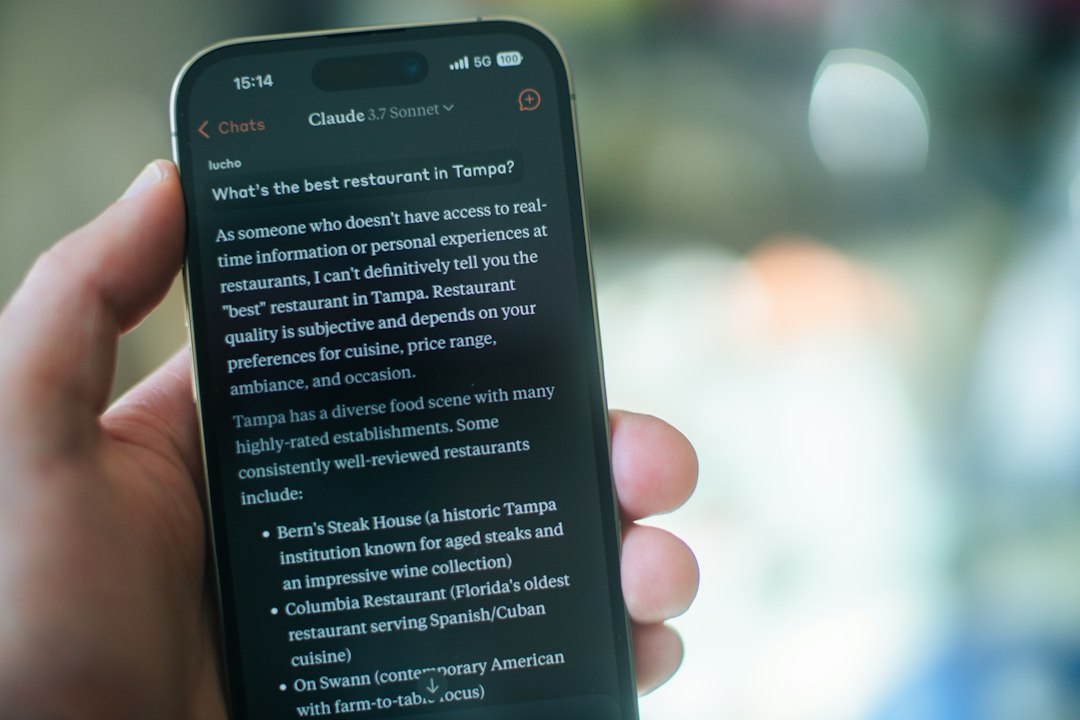
Imagine typing a single sentence into a chat window and instantly receiving a well‑researched essay, a piece of code, or a friendly recipe suggestion—no human writer needed. That’s the magic of large language models (LLMs), the AI engines behind tools like ChatGPT, Claude, Gemini, and many enterprise‑grade assistants. In the past year alone, LLMs have moved from niche research labs to everyday consumer products, reshaping how we write, code, learn, and even make business decisions.
But hype can be overwhelming. What exactly is an LLM? How does it differ from a “regular” AI model? And—most importantly—how can you start leveraging this technology today without needing a Ph.D. in machine learning? This post breaks down the essentials, walks you through real‑world use cases, and hands you actionable steps to integrate LLMs into your workflow, whether you’re a solo entrepreneur, a marketing manager, or a software developer.
Grab a coffee, settle in, and let’s demystify the world of large language models together.
—
1. What Is an LLM? – From Transformers to Real‑World Impact
1.1 The Core Technology: Transformer Architecture
At the heart of every modern LLM lies the transformer architecture, introduced in the seminal 2017 paper “Attention Is All You Need.” Unlike earlier recurrent neural networks (RNNs), transformers process entire sequences of words simultaneously, using self‑attention mechanisms to weigh the relevance of each token relative to every other token. This design enables:
- Scalability: Models can be trained on billions of parameters, capturing subtle linguistic nuances.
- Parallelism: Faster training on modern GPUs/TPUs, reducing time‑to‑market.
- Contextual Understanding: Ability to maintain long‑range dependencies, crucial for coherent paragraphs and multi‑turn conversations.
- Enable “explain code” feature: Paste a snippet and ask the LLM to generate a plain‑English description for code reviews.
- Leverage “docstring generation”: Prompt the model to create comprehensive docstrings adhering to your style guide.
- Integrate CI checks: Run generated code through static analysis (e.g., SonarQube) before merging.
- Key benefits (sustainability, BPA‑free)
- A call‑to‑action
- SEO keywords: “eco-friendly water bottle”, “sustainable hydration”
- Iterate: Change one variable at a time (tone, length, format) and compare results.
- Temperature: Set `temperature=0.2` for deterministic output; increase to `0.7` for creativity.
- Max tokens: Limit to avoid overly verbose responses.
- Auditing outputs for gender, racial, or cultural bias.
- Applying post‑processing filters (e.g., OpenAI’s moderation endpoint).
- Diversifying training data if you’re fine‑tuning.
- Mask sensitive information (names, IDs) before the request.
- Use encrypted connections (HTTPS) and verify TLS certificates.
- Prefer on‑premise models for regulated industries (finance, healthcare).
- Run a plagiarism check on critical outputs (e.g., published articles).
- Add a disclaimer when using AI‑generated content for public consumption.
- Understand the provider’s policy – OpenAI, Anthropic, and others grant commercial usage rights but require compliance with content policies.
- RAG pipelines: Ground responses in verified documents.
- Ask for citations: Prompt the model to include sources.
- Human‑in‑the‑loop: Have subject‑matter experts review high‑stakes outputs.
1.2 Size Matters – But Not the Whole Story
The “large” in LLM refers to the number of parameters (think of them as the model’s memory cells). Popular models range from:
| Model | Parameters | Typical Use‑Case |
|——-|————|——————|
| GPT‑3.5 | 175 B | General‑purpose chat, content generation |
| Claude 2 | 100 B+ | Enterprise assistance, safe completion |
| LLaMA 2 (70 B) | 70 B | Research, fine‑tuning for niche domains |
| Gemini Pro | 120 B | Multimodal tasks (text + images) |
While bigger models often deliver higher quality output, efficiency tricks—like quantization, distillation, and retrieval‑augmented generation—allow smaller models to punch above their weight. The key takeaway? You don’t always need the biggest model; you need the right model for your task.
1.3 How LLMs Learn: Pre‑training + Fine‑tuning
LLMs undergo two primary training phases:
1. Pre‑training – The model reads terabytes of publicly available text (web pages, books, code repositories) and learns to predict the next word in a sentence. This unsupervised phase builds a broad linguistic foundation.
2. Fine‑tuning – The model is then refined on a narrower dataset (e.g., medical literature, legal contracts) or guided with reinforcement learning from human feedback (RLHF) to align its responses with human expectations.
Understanding this pipeline helps you decide whether you need a generalist LLM (e.g., ChatGPT) or a domain‑specific fine‑tuned model (e.g., a medical assistant trained on PubMed articles).
—
2. Real‑World Applications – Turning LLM Capabilities into Business Value
2.1 Content Creation & Marketing
Problem: Teams spend hours drafting blog posts, social media copy, and SEO meta descriptions.
LLM Solution: Use a prompt like:
“`
Write a 600‑word blog post about sustainable travel, targeting millennials, with three actionable tips and a friendly tone. Include a catchy title and three SEO‑friendly headings.
“`
Actionable Steps:
1. Choose a platform – OpenAI’s ChatGPT, Anthropic’s Claude, or an open‑source model like LLaMA 2.
2. Set up a prompt template – Store reusable prompts in a spreadsheet or a simple internal tool.
3. Post‑process – Run the output through a grammar checker (e.g., Grammarly) and a plagiarism detector to ensure originality.
4. A/B test – Publish two variations and measure CTR, time‑on‑page, and conversion rates.
Result: Brands report up to a 40% reduction in content production time while maintaining or improving engagement metrics.
2.2 Customer Support Automation
Problem: High ticket volume leads to long response times and customer churn.
LLM Solution: Deploy a retrieval‑augmented generation (RAG) chatbot that pulls information from your knowledge base and crafts human‑like answers.
Implementation Blueprint:
| Step | Action | Tool/Tech |
|——|——–|———–|
| 1 | Index your FAQ, manuals, and ticket logs | Elasticsearch, Pinecone |
| 2 | Connect the index to an LLM via an API | OpenAI’s Retrieval API, LangChain |
| 3 | Define guardrails (tone, privacy) using system prompts | Prompt engineering |
| 4 | Monitor with analytics (resolution rate, sentiment) | Freshdesk, custom dashboards |
Outcome: Companies using LLM‑powered bots see a 30‑50% drop in average handling time and higher CSAT scores.
2.3 Software Development & Code Generation
Problem: Developers spend valuable time writing boilerplate code and searching documentation.
LLM Solution: Tools like GitHub Copilot (powered by OpenAI’s Codex) or Tabnine can autocomplete functions, suggest unit tests, and even refactor legacy code.
Practical Tips for Teams:
Benefit: Early studies show a 25% increase in developer productivity and a reduction in bugs related to misunderstood APIs.
2.4 Data Analysis & Decision Support
Problem: Non‑technical stakeholders struggle to extract insights from raw datasets.
LLM Solution: Use natural language to SQL (NL2SQL) models that translate plain English queries into executable database commands.
Step‑by‑Step Guide:
1. Connect your data warehouse (Snowflake, BigQuery) to an LLM via an API.
2. Prompt example: “Show me the monthly churn rate for the last six months, broken down by subscription tier.”
3. Validate the generated SQL before execution (use a sandbox environment).
4. Visualize results automatically with tools like Tableau or Power BI.
Result: Teams can answer ad‑hoc questions in seconds, freeing analysts to focus on deeper strategic work.
—
3. Getting Started – Building Your First LLM‑Powered Project
3.1 Choose the Right Model (and Provider)
| Use‑Case | Recommended Model | Reason |
|———-|——————-|——–|
| General content generation | OpenAI GPT‑4 / Claude 2 | High-quality, safe outputs |
| On‑premise, data‑sensitive tasks | LLaMA 2 (70 B) or Mistral | Open‑source, can be hosted locally |
| Multimodal (text + images) | Gemini Pro | Handles images, audio, and text |
| Real‑time low‑latency chat | DistilGPT or TinyLlama | Smaller footprint, faster inference |
Tip: Start with a free tier (e.g., OpenAI’s free credits) to prototype before committing to paid usage.
3.2 Set Up a Development Environment
1. Python ≥3.9 – Most LLM SDKs are Python‑first.
2. Install SDKs – `pip install openai anthropic langchain`.
3. API Keys – Store them securely using environment variables or secret managers (e.g., AWS Secrets Manager).
4. Version Control – Keep prompt templates in Git alongside code for reproducibility.
3.3 Prompt Engineering – The Secret Sauce
A well‑crafted prompt can be the difference between a vague answer and a laser‑focused solution.
Prompt Structure Blueprint:
“`
[System instruction] – Define role, tone, constraints.
[User query] – The actual request.
[Examples] – (Optional) Show a few input‑output pairs.
[Output format] – JSON, bullet list, markdown, etc.
“`
Example Prompt for a Product Description:
“`
You are a senior copywriter for an eco‑friendly brand. Write a 150‑word product description for a biodegradable water bottle. Use a friendly, persuasive tone. Include:
Output in markdown format.
“`
Testing Tips:
3.4 Fine‑Tuning vs. Prompt‑Only – When to Invest
| Scenario | Recommended Approach |
|———-|———————-|
| You have a niche domain (e.g., legal contracts) with proprietary data | Fine‑tune a base LLM on your corpus (using OpenAI’s fine‑tuning API or Hugging Face LoRA). |
| You need quick, occasional assistance (e.g., blog outlines) | Prompt‑only with system instructions. |
| You must comply with strict privacy regulations | Host an open‑source model on-premise; fine‑tune locally. |
Cost‑Effective Fine‑Tuning Tip: Use Low‑Rank Adaptation (LoRA), which updates only a tiny fraction of model weights, reducing compute cost by up to 90%.
3.5 Deploying at Scale
1. Containerize your LLM service (Docker + FastAPI).
2. Orchestrate with Kubernetes for auto‑scaling.
3. Cache frequent responses using Redis to cut API calls.
4. Monitor latency, token usage, and error rates with Prometheus + Grafana.
5. Implement safety layers: profanity filters, fact‑checking APIs, and user authentication.
—
4. Ethical, Legal, and Practical Considerations
4.1 Bias and Fairness
LLMs inherit biases from the data they ingest. Mitigate risks by:
4.2 Data Privacy & Security
When sending proprietary text to a third‑party API:
4.3 Copyright and Attribution
Generated text can unintentionally replicate copyrighted phrasing. Best practices:
4.4 Model Hallucinations
LLMs may fabricate facts (“hallucinate”). Countermeasures:
—
5. Future Trends – What’s Next for Large Language Models?
| Trend | What It Means for You |
|——-|———————–|
| Multimodal LLMs (text + image + audio) | Create AI assistants that can analyze screenshots, transcribe calls, and generate visual reports. |
| Instruction‑tuned “Chat” models (e.g., GPT‑4 Turbo) | Faster, cheaper interactions with near‑real‑time latency, perfect for live chat support. |
| Edge‑deployed LLMs (tiny models on smartphones) | Offline AI capabilities for privacy‑first applications (e.g., personal note‑taking). |
| AI‑native IDEs (code‑centric LLMs) | Seam
Key Takeaways:
- LLMs use transformer architecture to process language with high scalability and contextual understanding.
- Businesses can reduce content creation time by 40% and support handling time by 50% using LLMs.
- Start with free tiers and prompt engineering to integrate LLMs into workflows without heavy technical overhead.